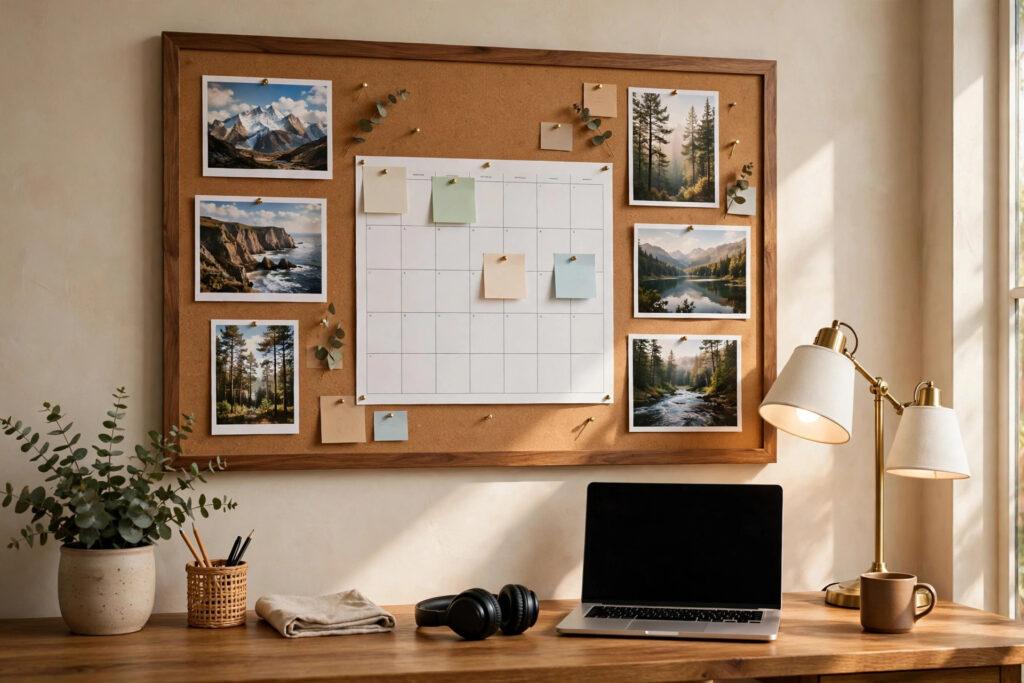
Every home has a spot where notes, reminders, and keepsakes pile up — on the fridge door, on a kitchen counter, or in a drawer nobody opens. A pinboard turns that clutter into something useful and good to look at. Decorative cork boards do exactly that, combining the warmth of natural cork with frames, shapes, and finishes that suit a modern home. They hold lists, timetables, photos, and tickets, while adding texture to a bare wall. A well-chosen board looks like part of the decor, not an office leftover. This guide shows how to choose, hang, and care for one.
Why Cork Boards Deserve a Place at Home
Cork is one of the most forgiving materials you can put on a wall. Light, warm, and naturally textured, it softens a room like wood or woven fabric. A cork board also works hard: pins go in easily, hold firmly, and leave only tiny holes that close up again, so the surface stays usable for years. Families use them for rotas, home workers for plans, and children for drawings. No two boards look exactly alike — small variations in tone and grain give each one character. A board also clears other surfaces: once notes have a proper home, the fridge door and counter stay clear. For ideas on making bare walls work harder, see our latest decoration trends and our simple ideas to refresh every room.
Choosing the Right Size, Shape and Frame
Size is the first decision, and it depends on how much you need to pin. A small board around 40 by 60 centimetres suits one person or a hallway, while a family kitchen or busy home office usually needs something closer to 60 by 90. Go bigger than you think — a small board fills up in a week. Shape matters too: a classic rectangle fits most walls, but a round or arched board softens a square room, and small hexagon tiles can be arranged into any shape. The frame sets the style: pale wood for a Scandinavian room, dark walnut for a study, slim black metal for a modern office. When you shop for decorative cork boards, check the cork thickness as well as the frame, because thicker cork holds pins better and lasts longer. Our metal wall decoration ideas show how a framed board can sit alongside other wall pieces.
Where to Hang a Cork Board
The best place for a cork board is where you will actually use it. In a kitchen, hang it near the door or fridge, at a height everyone can reach, for shopping lists, recipes, and school letters. In a home office, place it beside or above the desk, within arm’s reach, so notes and deadlines stay in view without crowding the work surface. A hallway board holds keys, post, and reminders, while a bedroom board holds photos and tickets. Avoid strong direct sunlight, which can fade and dry the cork, and keep it away from bathroom steam. A light board can hang from adhesive strips, but a large board needs proper fixings, especially on plasterboard. Our wall decorations for the dining room show how to plan a wall display, and our interior design tips explain how to balance a functional piece with the room.
Styling Ideas for Home Office, Kitchen and Kids’ Rooms
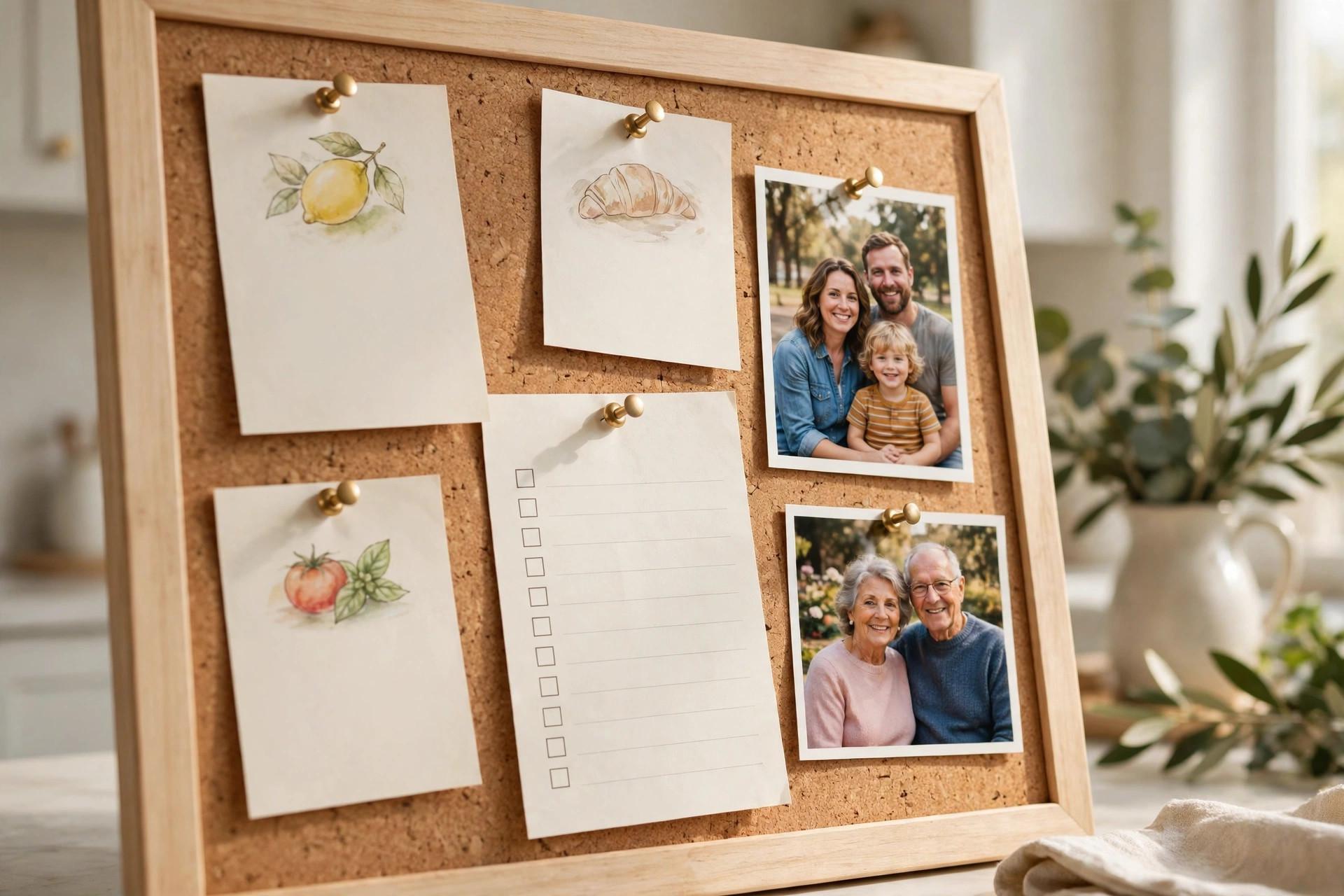
A board should look good even when full, and a little styling makes all the difference. Group similar things together, leave breathing space, and keep the key items at eye level. Use matching pins in wood, brass, or one bright colour, so the board looks calm. In a home office, pin a weekly plan, a few images, and one photo — nothing more, so it stays a tool. In a kitchen, a weekly menu, shopping list, and favourite recipe card are both useful and charming. Children’s boards can be more playful: bright pins, washi tape, drawings, and certificates. Rotate the display every month or two, so the board never becomes a wall of forgotten paper. Decorative cork boards grow with the household, holding school art one year and exam timetables the next. A western wall decor piece in wood and leather can complement a cork board in a rustic kitchen or hallway.
Keeping Your Board Neat and Useful
Decorative cork boards only work if they stay tidy, so a short weekly routine is worth building in. Weekly, take down anything out of date and file or recycle it. Wipe the frame with a dry cloth and brush the cork gently to lift dust. If the cork looks dry, a light rub with natural oil restores its warmth — test on a corner first. Replace bent or rusty pins, and keep spares beside the board. If one spot wears from heavy pinning, rotate the board or move the busy area to a fresh patch. With this simple care, a good board can serve a household for a decade. Our decorative wall moulding guide shows how framed wall features stay sharp, and our home decor ideas offer more ways to keep walls useful.
Creative Uses Beyond Pinning Notes
A cork board can do far more than hold paper. Cut cork tiles into shapes for a pinboard map, a jewellery display, or a photo wall without frames. Small tiles make coasters and trivets, while a strip behind a desk hides cables and holds headphones. In a craft room, a large board becomes a mood board for fabric swatches, paint samples, and project ideas, keeping everything visible. Gardeners pin seed packets and planting plans, and cooks pin recipe cards. A spring decor and antique trends board can even hold dried flowers and vintage postcards. Pairing a board with soft furnishings makes a room feel complete: a velvet decorative pillow on the chair below adds comfort and colour to a reading corner. Cork is forgiving and easy to cut, so experiment — a project that fails can simply be tried another way.
Conclusion
A cork board is one of the simplest home upgrades: cheap, practical, and surprisingly good looking when chosen and styled with care. Pick a size that fits your needs, hang it where you will use it daily, and keep it tidy with a weekly check. Whether it holds a family rota or a work plan, it turns everyday paper into part of the home. Start with one board in the busiest room, and you will soon wonder how the house managed without it.