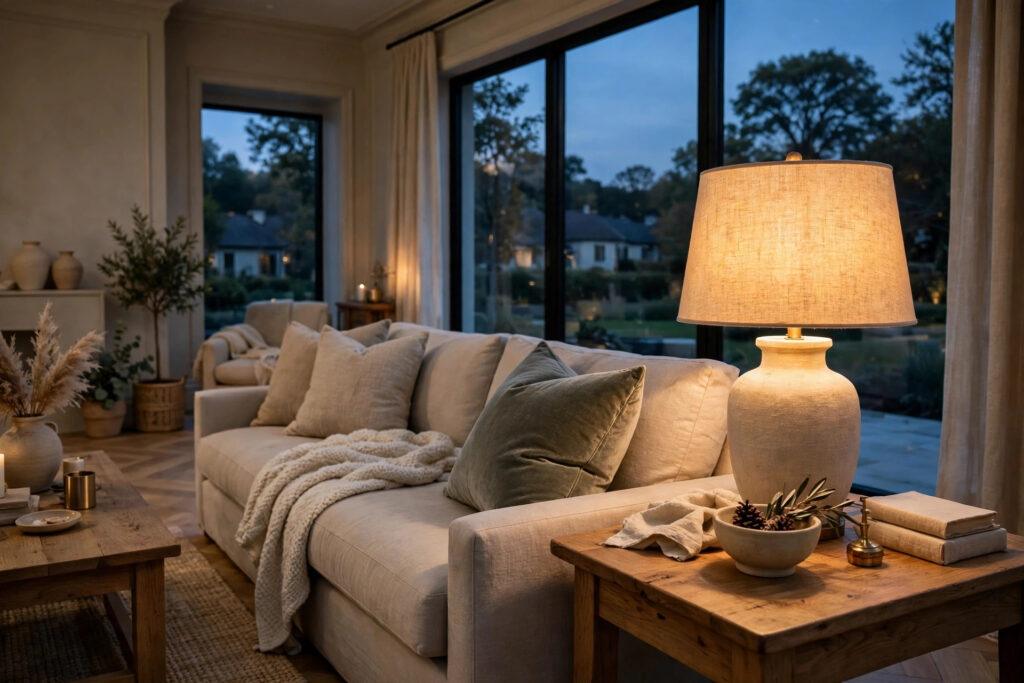
A lamp shade is one of the smallest things in a room, yet it changes both how the room looks and how it feels after dark. Swap a plain shade for a patterned one, and a quiet corner suddenly has colour. Choose a warm fabric, and the evening light turns soft and golden. Decorative lamp shades are also one of the cheapest ways to refresh a room: there is no painting, no new furniture, and no electrician needed. You simply lift off the old shade and set the new one in place. This guide explains how to choose the right shape, size, fabric, and colour for each room.
Why the Shade Matters More Than the Lamp
Most people shop for the lamp base and treat the shade as an afterthought, but the shade does most of the visible work. It sets the shape the eye sees first, it decides whether light spreads upward, downward, or all around, and it colours the light itself. A white shade gives clean, bright light for reading. A cream or amber shade gives a warmer glow that suits evenings and conversation. A dark shade looks dramatic and pools light above and below, which can feel cosy in a bedroom but gloomy in a workspace. For wider ideas on balancing light with furniture and colour, see our interior decoration tips and our simple ideas to refresh every room.
Choose the Right Shape and Size
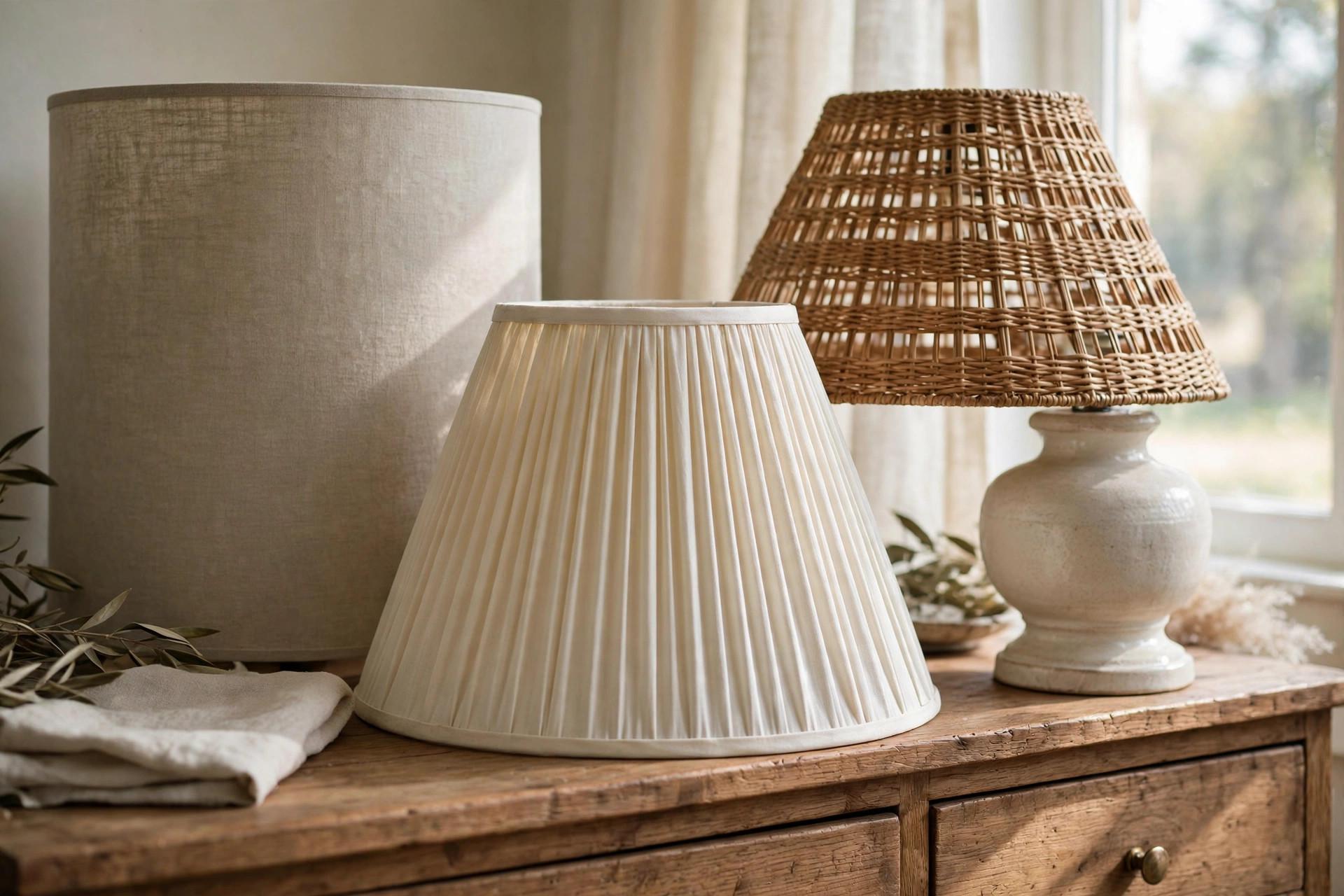
Shade shape should follow the lamp base and the table it stands on. A drum shade, a straight-sided cylinder, suits most modern lamps and works well on square or round tables. An empire shade, wider at the bottom than the top, suits classic lamps and looks at home in a living room with older furniture. Size matters just as much. A good rule is that the shade should be about two-thirds the height of the lamp base, and its widest point should be wider than the widest part of the base, so the lamp looks stable. Decorative lamp shades come in many shapes, but the right one always looks as though it belongs to its lamp. Our guide to decorating a console table shows how a well-sized lamp can anchor a narrow surface.
Fabric, Colour, and Pattern
Fabric is where a shade earns the word decorative. Linen gives a soft, natural texture and lets a gentle light through. Cotton is smooth, affordable, and easy to clean. Silk looks luxurious and glows beautifully, but it needs care and fades in strong sunlight. Colour should work with the room, not fight it. If your room is calm and neutral, a patterned shade is an easy way to add interest without repainting. If the room is already colourful, choose a plain shade in one of the room’s quieter tones. Hold the fabric up to the light before you buy, because a colour that looks rich in the shop can look very different when lit from inside. A soft texture elsewhere in the room, such as the cushions in our guide to velvet decorative pillows, can echo the shade and pull the scheme together.
Match the Shade to the Room
Each room asks something different from its lamps. In the living room, the main lamp is often a feature, so choose a shade with presence: a generous drum in linen, or a gentle pattern that picks up a colour from the sofa or curtains. In the bedroom, softness matters most. Decorative lamp shades should always suit the job the room asks of them, not just the look you love in the shop. If the wall behind the lamp is part of the display, our guide to decorative wall molding shows how simple wall detail can frame a lamp, and our western wall decor ideas show how a warm-toned shade can sit beside rustic wall pieces. For a bolder period look, our notes on 60s decorating style include the playful shapes and colours that pair well with a statement shade.
Care, Safety, and Easy Updates
A shade only looks good when it is clean, so dust it regularly with a soft brush or a lint roller, working from the top down. Fabric shades can be cleaned gently with a dry cloth; avoid water on silk and on glued seams. Safety matters as well. Always use a bulb within the wattage printed on the lamp, and keep the shade clear of the bulb so heat can escape. Modern LED bulbs run cooler and are a safer choice for fabric shades. Shades are also the easiest seasonal update in the home. Swap a heavy, dark shade for a light linen one in summer, and bring back a warm, rich tone in winter. Our collection of home decor ideas has more quick seasonal swaps, and our guide to the latest decoration trends shows which colours and textures are being used most this year.
Mix Shades With the Rest of Your Decor
A lamp shade should never sit alone in a room’s design. Repeat its colour or pattern somewhere nearby: a cushion, a throw, a picture frame, or a vase in the same tone will make the shade look intentional. You do not need matching sets everywhere — two different shades in the same room often look better than two identical ones, as long as they share a colour or a material. Try a plain shade on the main lamp and a patterned one on a smaller lamp across the room. Small adjustments — moving the lamp a few centimetres or swapping a cushion — usually fix the problem. For help thinking through the whole room, our interior design tips explain how to tie separate pieces into one calm, finished look.
Conclusion
A lamp shade is a small change with a large effect. Choose the right shape and size for the lamp, pick a fabric and colour that suits the room, and keep the shade clean and safe. Change it with the seasons, echo its colour elsewhere in the room, and let it do the quiet work of making evenings softer and mornings brighter. Decorative lamp shades prove that good home decor does not always need a big project — sometimes it only needs five minutes, a new shade, and a lamp switched on at dusk.