
Buyers who purchase new construction homes in Surprise communities built by Lennar, Pulte, Toll Brothers, and other active West Valley builders often assume the HVAC duct system is pristine at move-in. The home is brand new. Nothing has lived in it. The ducts could not possibly have accumulated anything yet. This assumption is understandable and, for most Surprise new construction buyers, incorrect. The duct system in a new home typically carries construction debris from the build process, and Surprise’s first haboob season adds a layer of desert particulate on top of it within the first twelve months of occupancy.
What Stays in the Ductwork After Construction
The sequence of events during a home’s construction creates multiple opportunities for debris to enter the duct system before the home closes. Ductwork is typically installed before drywall, which means open duct runs are present in the home during drywall installation, texture application, painting, flooring installation, and trim work. Each of these trades produces fine airborne particulate: drywall joint compound dust, texture spray overspray, paint aerosol, flooring adhesive off-gassing, and sawdust from trim cutting all settle into open duct runs during construction.
Most Surprise builders install duct covers over register openings during construction to reduce debris entry. These covers vary in quality and consistency of installation, and they do not prevent debris from entering through the ductwork itself before the covers are placed. By the time the air handler and grilles are installed and the HVAC system is commissioned, the duct interior carries a layer of construction-period debris that no inspection step in a standard builder walkthrough identifies or addresses.
The NADCA Standard for Post-Construction Duct Cleaning
The National Air Duct Cleaners Association (NADCA) specifically identifies post-construction as one of the primary scenarios warranting professional duct cleaning, alongside renovation projects, confirmed mold growth in the duct system, vermin infestation, and excessive dust and debris. The NADCA’s recommendation is driven by the same reality that Surprise new construction buyers discover: construction debris in the duct system distributes throughout the home through every operating cycle from the moment the HVAC system is first run.
NADCA’s source removal standard requires that the cleaning process actually remove debris from duct surfaces through contact agitation and high-velocity vacuum capture, rather than simply displacing it from one location to another. Homeowners evaluating duct cleaning providers in Surprise should ask specifically about source removal methodology and before/after documentation, as these are the markers that distinguish thorough professional cleaning from less effective approaches.
The First Haboob Season Adds Another Layer
Surprise’s haboob season runs approximately from April through June, which means a home that closed in winter or early spring will experience its first haboob season within the first six months of occupancy. Fine silica particles at PM2.5 concentrations penetrate a home’s building envelope during haboob events through door seals, window frames, utility penetrations, and return air openings. The HVAC system draws these particles through return vents during and after each event, and the particles that pass through the MERV 8 filters standard in most new construction homes enter the duct system and air handler.
After one Arizona haboob season, the duct interior of a new Surprise home carries construction residue from the build and a first layer of desert particulate from haboob events. The combination creates a duct environment that is meaningfully different from a new installation in a climate without Arizona’s particulate challenges. Scheduling a professional cleaning at the 12 to 18-month mark addresses both deposits together rather than allowing them to compound through subsequent seasons.
What Circulating Construction Dust Does in a Lived-In Home
The debris that construction leaves in a Surprise home’s ductwork does not sit permanently in place. Airflow turbulence at each HVAC startup cycle re-suspends surface layer deposits back into the airstream circulating through the home. The amount re-suspended per cycle is small, but the cumulative effect of continuous re-suspension through an entire cooling season is a measurable ongoing contribution to the home’s indoor particulate load. This is particularly relevant for families with infants or young children who spend time on floors where settled particles from supply register airflow accumulate.
Drywall dust that enters the respiratory tract carries fine silica, which is an irritant at concentrations well below those that create acute symptoms. The EPA’s indoor air quality guidance identifies construction dust as a category of indoor air concern in post-construction environments. For most Surprise families in new homes, the ongoing re-suspension of construction debris from ductwork adds to the indoor particulate load without creating dramatic symptoms, which is exactly why the source is rarely identified without a professional inspection.
Signs That a New Surprise Home’s Ducts Are Overdue for Attention
- Fine white or gray dust appears on horizontal surfaces near supply registers more quickly than in other areas of the home
- Musty or earthy smell from supply vents after the first monsoon event, indicating biological material entered the duct system
- Visible dust discharge when the HVAC system starts a new cycle after being off for several hours
- Children or household members with unexplained indoor allergy or sinus symptoms in a home that otherwise tests clean
- No documented post-construction duct cleaning in the home’s service history
- The home has reached 12 to 18 months of occupancy after a new construction close
Timing the First Cleaning and What to Expect
The optimal timing for a first professional duct cleaning in a new Surprise home is 12 to 18 months after move-in, which captures the full first haboob season of particulate accumulation alongside the construction residue from the build. Combining the duct cleaning appointment with the home’s first annual HVAC maintenance visit is a practical scheduling approach that addresses both the distribution system and the mechanical equipment in a single service period.
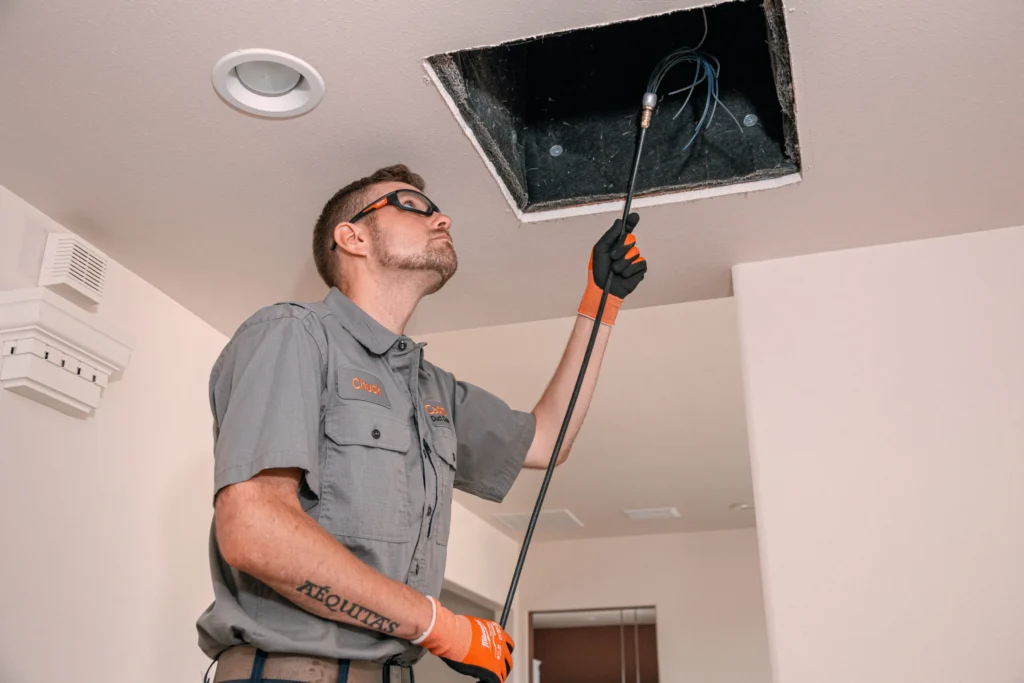
During the cleaning, a professional crew connects high-velocity vacuum equipment to the main duct trunk, agitates supply and return branch runs using compressed air tools, addresses the air handler interior including the blower wheel and plenum, and cleans all accessible register boot openings. Before/after documentation including photos of the duct interior, is standard practice with reputable providers and gives homeowners a factual record of the cleaning scope and result.
Starting the Maintenance Relationship Before the Second Season
The transition from the first to the second year of Surprise homeownership is the natural moment to establish a maintenance routine that reflects what the Arizona climate actually demands, rather than the maintenance calendar that may have served the homeowner well in a previous climate. Buyers in new Surprise communities who want to establish this routine can ask about duct cleaning in Surprise, AZ with licensed local providers who have specific experience with West Valley new construction conditions and can combine the duct cleaning appointment with the broader HVAC system evaluation the home needs at the 12-month mark.
A clean duct system at the end of year one gives the Surprise family a genuinely fresh starting point for year two: no construction debris, no first-haboob-season accumulation, and a clear baseline against which future filter and cleaning intervals can be calibrated for the specific home and its occupants.