
Choosing insulation for a building project is about more than simply finding a material with a high thermal resistance rating. The right choice can influence energy efficiency, temperature control, fire safety, equipment protection, durability, and long-term operating costs. These factors become even more important when a project includes areas exposed to elevated temperatures, industrial equipment, furnaces, kilns, pipes, or other heat-intensive systems.
With so many insulation materials available, project teams can easily focus on price or thickness while overlooking the conditions in which the material must perform. A better approach is to evaluate the application’s temperature range, environmental exposure, mechanical requirements, and installation conditions first. Understanding these factors makes it easier to select an insulation solution that provides dependable performance throughout the life of the project.
Start With the Operating Temperature
Temperature should be one of the first considerations when selecting insulation. Different materials are designed to perform within specific temperature ranges, and using a conventional insulation product in an extreme-temperature environment can result in premature deterioration or inadequate protection.
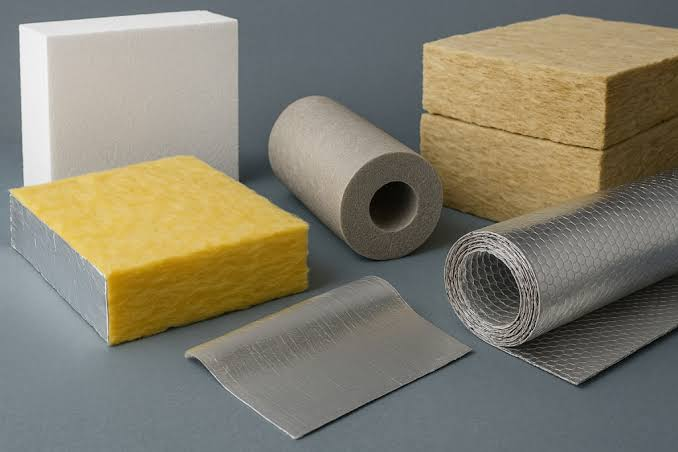
For standard building applications, materials such as fiberglass, mineral wool, and rigid foam may be appropriate depending on the project. However, areas surrounding furnaces, kilns, high-temperature pipes, and industrial processing equipment require materials specifically engineered for elevated temperatures.
Ceramic fiber is commonly used in demanding thermal environments because it combines low thermal conductivity with strong resistance to high temperatures. Calcium silicate is another option for applications where thermal performance, rigidity, and fire resistance are important. Before selecting a product, engineers should identify both the normal operating temperature and any potential temperature spikes.
Consider Thermal Performance and Energy Efficiency
Insulation is ultimately intended to control heat transfer. A material’s thermal conductivity, thickness, density, and installation quality all affect how effectively it performs.
Lower thermal conductivity generally means the material can provide better resistance to heat flow, although the best solution depends on the complete system rather than one specification. For industrial applications, effective insulation can help maintain process temperatures, reduce heat loss, and lower the energy required to keep equipment operating at the desired temperature.
Project teams should also consider how the insulation will perform over time. Compression, moisture exposure, thermal cycling, gaps, and poor installation can reduce real-world performance. Comparing technical specifications under relevant operating conditions provides a more reliable basis for choosing between materials.
When evaluating specialized high-temperature solutions, project managers can learn more about available insulation materials and configurations before determining which option best fits the application.
Evaluate Fire Resistance and Environmental Conditions
Thermal performance is only part of the decision. Insulation may also need to withstand flames, chemical exposure, moisture, vibration, or repeated heating and cooling cycles.
For buildings and facilities containing high-temperature equipment, fire resistance can be particularly important. Materials such as ceramic fiber and calcium silicate are used in applications where protection against intense heat and fire is required. The appropriate choice depends on the system design, temperature exposure, and applicable safety requirements.
Environmental conditions also matter. An insulation material that performs well in a dry indoor environment may not be suitable for an area exposed to moisture. Chemicals, mechanical impact, or outdoor conditions. Engineers should examine the surrounding environment and determine whether the insulation needs additional protection, a specific facing, or a more durable construction.
Match the Material to the Physical Application
Insulation does not come in one universal form. The shape and installation method can be just as important as the material itself.
Flexible blankets may be useful when insulation needs to conform to irregular surfaces. While rigid boards can provide structural stability on flat or defined surfaces. Ceramic fiber can also be manufactured as blankets, boards, paper, cloth, rope, tape, and modules. Allowing it to serve different high-temperature applications.
For sealing applications, specialized fiberglass rope or gasket materials may be more appropriate than conventional insulation. Similarly, custom-shaped components can make sense when equipment has unusual dimensions or tight installation tolerances.
Before ordering, project teams should confirm the required dimensions, density, thickness, attachment method, and available installation space. A technically excellent material can still perform poorly if it does not fit the application correctly.
Balance Cost With Long-Term Performance
Initial purchase price should not be the only financial consideration. A less expensive insulation material may become more costly if it requires frequent replacement. Provides insufficient thermal protection, or increases energy consumption.
A better approach is to evaluate total cost over the expected service life. This includes material costs, installation labor, maintenance, replacement requirements, energy consumption, and potential downtime.
Durability is particularly important in industrial environments where insulation may be exposed to continuous high temperatures or repeated thermal cycling. Choosing a material designed for the operating conditions can reduce maintenance requirements and help protect surrounding equipment.
Project teams should also work with manufacturers or qualified insulation specialists when specifications are complex. Technical guidance can help identify suitable material grades, densities, dimensions, and installation methods before purchasing decisions are finalized.
Conclusion
Selecting the right insulation material requires a complete understanding of the building or industrial system in which it will be installed. Temperature exposure, thermal conductivity, fire resistance, environmental conditions, physical configuration, and long-term durability should all be considered before making a decision.
For conventional building areas, standard insulation materials may provide an efficient and practical solution. High-temperature zones, however, often require specialized products such as ceramic fiber or calcium silicate insulation that are engineered for demanding thermal conditions.
The most effective insulation strategy is therefore not simply the one with the lowest upfront cost. It is the solution that matches the application’s requirements while delivering dependable performance over time. By evaluating technical specifications carefully and considering the full lifecycle of the project. Building owners and engineers can make insulation decisions that support safety. Efficiency, and long-term operational value.
 Ali
Ali