
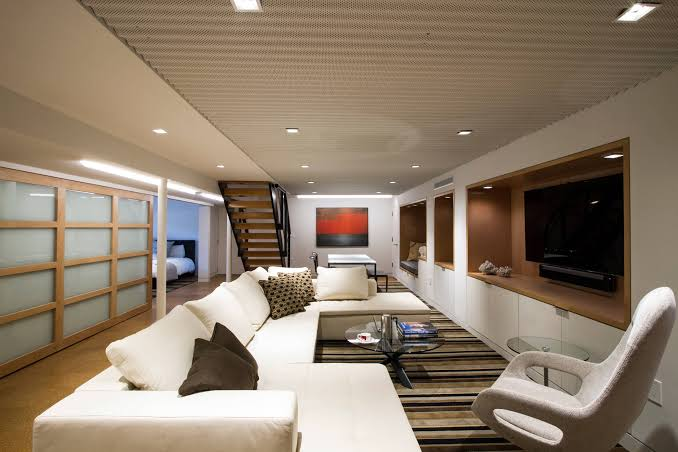
Basements often begin as storage areas and gradually accumulate boxes, unused furniture, and household equipment. Yet with thoughtful basement renovations, the same square footage can become one of the most versatile areas of a home.
The key is to treat the lower level as genuine living space. That means considering comfort, lighting, organization, circulation, and durability from the beginning rather than simply covering unfinished surfaces.
Begin With the Existing Basement
Before developing a design, evaluate current conditions. Successful basement renovations should account for the foundation, moisture conditions, floor level, ceiling height, mechanical systems, plumbing, windows, and access points.
These existing features can shape the entire project.
Identify Fixed Elements
Columns, stairs, utility equipment, and plumbing stacks may influence where rooms can logically be located. Instead of viewing these elements only as obstacles, incorporate them into the layout wherever possible.
A structural column, for example, can sometimes become part of a partition or storage feature.
Divide the Basement Into Useful Zones
Open layouts can make a basement feel spacious, but completely open rooms may lack purpose. Creating defined zones often produces a more functional environment.
One portion might support entertainment while another serves as a work area. Storage can occupy less prominent sections while frequently used spaces receive better lighting and convenient access.
Basement renovations become more adaptable when these zones can evolve over time.
Improve Visual and Physical Comfort
Comfort involves temperature, acoustics, lighting, and material selection.
Basements can feel cooler than upper floors, so insulation and flooring decisions deserve careful consideration. Sound management may also be useful when the lower level contains entertainment equipment, exercise areas, or workspaces.
Use Lighting to Change the Atmosphere
A layered lighting plan can dramatically affect how basement renovations feel. Combine broad illumination with focused task lights and softer accent lighting.
Where natural light exists, avoid blocking it with tall furniture or unnecessary partitions.
Plan Storage Before Finishing the Walls
Basements frequently continue serving as storage areas after renovation. Instead of allowing boxes to occupy finished rooms, integrate storage into the design.
Wall-to-wall cabinetry, closets, shelving, and under-stair compartments can keep household items organized.
Thoughtful basement renovations balance attractive living areas with practical storage requirements.
Select Finishes With Maintenance in Mind
A basement is not always suited to exactly the same materials used elsewhere in the house. Consider durability and environmental conditions when choosing floors, wall finishes, cabinetry, and trim.
Surfaces that are easy to clean and maintain can make the finished space more practical for everyday use.
Those exploring basement renovation options nearby may also benefit from discussing material suitability for local building conditions.
Avoid Designing Around Trends Alone
Trends can provide inspiration, but basement renovations should primarily reflect household needs.
A highly specialized design may become limiting when routines change. Neutral foundational finishes combined with easily replaceable decorative elements offer greater flexibility.
Create a Basement That Connects With the Home
The lower level does not need to copy the rooms upstairs, but some visual continuity can help it feel integrated. Similar trim details, complementary finishes, consistent lighting temperatures, or related materials can create that connection.
Conclusion
Successful basement renovations transform neglected square footage into purposeful living space through careful planning rather than decoration alone. Evaluating existing conditions, defining activity zones, improving lighting, incorporating storage, and selecting appropriate materials can make the basement more comfortable and adaptable. A well-considered lower level can support entertainment, work, hobbies, guests, or family activities without sacrificing organization. When every design choice serves a practical purpose, the basement becomes a genuine extension of everyday home life.