
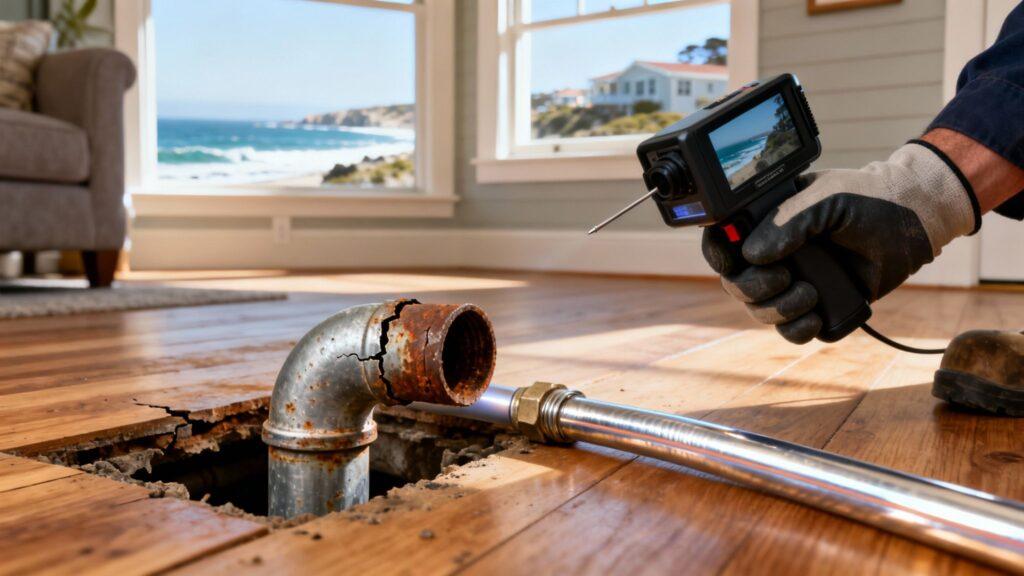
Renovating an old house can be exciting, thanks to its unique charm and beautiful woodwork. However, old plumbing systems under these features are often overlooked. Focusing only on surface improvements and ignoring your pipes’ condition can lead to serious structural damage.
The Hidden Dangers of Subsurface Moisture
Homeowners often worry about water spills or wet shoes damaging their floors, but the biggest moisture threats usually come from beneath the foundation.
- Old Pipe Materials: Old homes commonly have old metal or galvanized pipes that have deteriorated due to years of wear.
- Unseen Dangers: As the pipe leaks underneath a concrete floor, it drips straight into the ground without leaving any visible puddles in your home, which makes it extremely difficult to detect.
- Moisture Wicking: The water leaking from your pipe will be absorbed by the surrounding ground and concrete, drawing moisture into your wood subflooring and planks.
Local Environment, Soil Types, and Climate Impact
The local environment greatly affects the lifespan of your water system. Regional weather conditions and local soil composition damage the stability of the concrete foundations and underground pipes.
- Clay Soils: In areas that have a lot of clay soil, the soil expands when wet and contracts when dry. This causes tremendous stress to the underground pipes and concrete foundations.
- Regional Humidity: Humid weather in the region and the high moisture content in the soils cause external corrosion of the pipes. Soil moisture deteriorates old metal pipes.
- Historic Home Styles: Old cottage-style homes were constructed using different standards from today’s. They lack protection from soil and weather damage to their foundations.
Warning Signs of Hidden Plumbing Failures
Underground plumbing pipes are not visible. So, you need to look for these warning signs of Damaged plumbing system.
- Increase in Floor Temperature: There will be hot spots on the concrete floor because of a leak from a hot water pipe running underground.
- Warped Floorboards: If the floorboards begin buckling, cupping, or getting spongy and soft, it could be because of moisture accumulating under the floors.
- Unpleasant Smells: A constant musty smell may indicate the presence of hidden mold growth under the subfloors and within walls.
- Increase in Utility Bills: A sudden increase in water bills when there has been no increase in water usage is one of the main signs of underground leaks.
Smart Solutions for Plumbing Protection
Protecting your property means acting early. Upgrading to modern plumbing systems prevents major disasters and helps your house last much longer.
- Expert Leak Detection: Specialists use special listening tools and thermal cameras to locate hidden pipe damage underneath without breaking your floors.
- Focused Pipe Repairs: Plumbers can fix specific trouble spots or reroute damaged water lines to keep them away from risky slab foundation zones.
- Subfloor Care: Keeping your underground pipes and subfloor in great shape protects your home framing and keeps your indoor air clean.
Understanding the True Cost of Neglecting Your Plumbing System
Most consumers prioritize interior improvements. However, reacting only when a pipe bursts can affect your home’s budget.
- Emergency Repair Cost: Repairing a critical case of a water main break beneath the concrete floor involves a lot of floor demolition using a jackhammer. It is much more expensive than regular plumbing maintenance.
- Additional Issues of Wood Rotting: Unresolved moisture problems in your crawlspace or subfloor can rot wooden joists and load-bearing studs, ruining your entire home renovation schedule.
- Loss of Property Value: The age of underground pipes is an important factor for future owners and inspectors. It is crucial for protecting your property’s resale value.
Choosing the Right Materials for Your Upgrade
When replacing old pipes, you can choose from several modern materials. The best option depends on your climate, water quality, and home design.
- PEX Piping: PEX piping is durable, freeze-resistant, and affordable for older wall installations.
- Copper Pipes: Copper pipes are known to be highly durable and are naturally antimicrobial.
- Professional Installation: By employing qualified professionals, you can ensure that your plumbing network meets all the building regulations in your locality.
Practical Steps to Protect Your Home Plumbing Today
Protect your plumbing system before it damages your home. Small, consistent actions today prevent massive headaches tomorrow.
- Schedule Annual Inspections: Hire a plumber to do yearly inspections using a camera to check your main sewer and supply pipes.
- Use Automated Leak Detection Systems: Install automated water shut-off valves near your major entry points to detect any unusual water flow.
- Monitor Your Water Bill: Stay on top of your monthly utility bills. An unexpected spike can be your house crying for help.
Protecting your older home’s infrastructure keeps your living spaces safe and preserves your property value for years to come. Routine plumbing checks and modern upgrades ensure small leaks never turn into expensive structural disasters.