
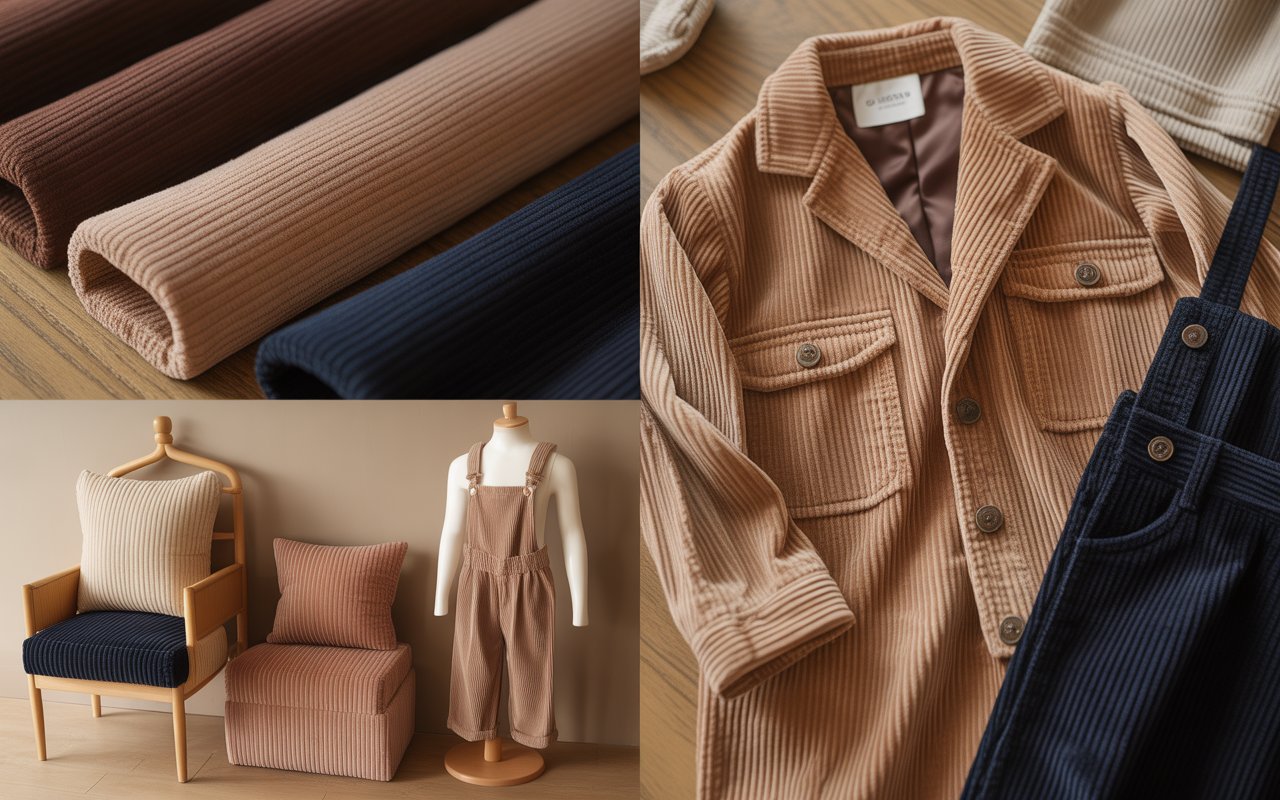
Corduroy is a unique fabric recognized for its durability, texture, and iconic ridged appearance. Unlike smoother fabrics, its features raised ribs, known as wales, which create a tactile and visually appealing surface. Over the centuries, this fabric has become a staple in clothing, from jackets and trousers to children’s wear, as well as in home décor items like upholstery and cushions.
What is Corduroy Fabric?
It is a woven textile with a distinctive ridged pattern, making it instantly recognizable. These ridges, or wales, give its signature texture while providing strength and versatility.
Materials used in it include:
- Cotton: The most common fiber, offering softness, breathability, and natural durability.
- Cotton/polyester blends: These blends increase wrinkle resistance and durability while retaining the natural feel of cotton.
- Full polyester: Produces a slightly stiffer fabric, often used in lower-cost or utility garments.
- Wool: Used occasionally, woolhas softer, less visible ridges but retains warmth and resilience.
It is also valued for its color variety and visual appeal. Fabric producers often use pigment-dyed techniques or intentionally uneven dyeing methods, which create subtle fading and enhance the fabric’s aesthetic charm over time.
Technical Specifications
It is constructed with a three-yarn weaving system:
- Two primary yarns create a plain or twill weave, forming the foundation of the fabric.
- A third yarn is interwoven to form floats, which rise above the base weave and are eventually cut to form the raised ridges, or wales.
Wale formation and significance:
- The float yarns are cut, brushed, and singed to create the soft ridges characteristic of corduroy.
- Wale number: This refers to the number of ridges per inch of fabric.
- Low wale number: Fewer ridges per inch → thicker, more prominent cords.
- High wale number: More ridges per inch → thinner, closely packed cords.
- Standard: it typically features 11–12 wales per inch, balancing texture and durability.
This structure gives it its distinctive feel, durability, and flexibility, making it suitable for a wide range of garments and applications.
History of Corduroy
The story of it begins over 1,800 years ago. Historians trace its roots to Egyptian fustian (~200 AD), a rough fabric featuring raised ridges similar to it.
Modern development in 18th-century England where textile manufacturers refined the weaving process to produce a softer, more durable, and visually appealing fabric.
Origin of the name:
- A widely cited but debunked theory suggests corduroy comes from the French “corde du roi” (cord of the king). There is no historical evidence to support this.
- A more plausible origin is the British term “kings-cordes”, used during the early 19th century, or the surname Corderoy.
Popularity through history:
- 1700s: It was worn by all social classes, from working people to middle-class citizens.
- 19th century: Velvet became the preferred luxury fabric, and it earned the nickname “poor man’s velvet.”
Corduroy in the 20th Century
It enjoyed fluctuating popularity throughout the 20th century.
- World War I: The fabric was use extensively in military uniforms and school attire due to its durability.
- Early 20th century: It remained moderately popular for casual wear and work garments.
- 1950s: The fabric fell out of fashion, largely replaced by other textiles in mainstream clothing.
- 1970s revival: It experienced a resurgence in Western culture, influenced by bands like the Grateful Dead. Its association with working-class heritage and unique texture made it a fashion statement once again.
Modern Times
Today, it is celebrate for its versatility and resilience. It is primarily use in:
- Apparel: Pants, jackets, skirts, and children’s clothing.
- Home décor: Upholstery, cushions, and decorative items.
Recent trends have seen a return to natural fibers, increasing the popularity of cotton and wool over synthetic blends. Although it no longer has the cult-like status it held in the 1970s, it remains a practical, stylish choice for everyday use.
How Corduroy is Made
The production of it combines traditional weaving techniques with modern industrial processes:
- Weaving: Fabric starts with a plain or twill weave. Additional pile yarns are interlaced to form the ridges.
- Glueing: The back of the fabric is temporarily to secure the pile yarns during cutting.
- Cutting pile yarn: Industrial cutters sever the pile yarns, creating the soft ridges. The fabric is then brushed and singed for uniform texture.
- Dyeing: Pigment dyeing produces mottled, visually appealing patterns. Over time and through washing, these colors develop subtle fading, enhancing the fabric’s aesthetic charm.
Uses of Corduroy
It has long been value for its durability and distinctive ridge texture, making it a popular choice across both fashion and home décor.
Apparel:
- Overalls/Dungarees, Pants, and Jackets: it is a go-to fabric for casual and workwear clothing. Its thick, sturdy ridges provide warmth, durability, and comfort, making it ideal for garments that see daily wear.
- Children’s Clothing: The addition of spandex blends allows corduroy to be stretchy, making it a comfortable and practical choice for children’s pants, jackets, and overalls. Its resilience ensures it withstands active use.
Home Décor:
- Furniture Upholstery: it textured surface and durability make it a favored fabric for chair and couch coverings. It provides a soft, cozy feel while standing up to daily wear.
- Cushions and Decorative Items: The ridged texture adds visual interest to cushions, throws, and other home accessories, giving a stylish and tactile dimension to interiors.
Historical Use:
- It was once used for automobile upholstery during the early days of the automotive industry. While modern vehicles have transitioned to more durable materials, vintage cars and certain retro designs sometimes still feature it elements.
Global Production of Corduroy
Its production is influence by global textile markets and the availability of raw fibers:
- Largest textile producer: China dominates global textile manufacturing and likely produces the highest volume of it fabric and finished garments.
- Largest corduroy-specific producer: Sintex (India) claims to be Asia’s largest dedicate it manufacturer.
- Factors affecting production and availability: The cost and availability of cotton, wool, and synthetic fibers, along with technological advancements in textile machinery, determine global supply. Economic factors, labor, and trade policies also play a role in production efficiency.
Cost of Corduroy
It is generally 10–20% more expensive than plain-weave fabrics made with similar fibers.
- Reason: The production of it involves a complex weaving process, cutting and finishing of pile yarns, and sometimes intricate dyeing techniques.
- Modern efficiency: Advances in textile manufacturing have reduced production times, making it more accessible than in the past, yet its detailed process still commands a slight premium over simpler fabrics.
Types of Corduroy
It comes in a variety of types, each defined by its wale count, texture, and finish:
- Standard: 8–13 wales per inch; balanced texture suitable for most apparel.
- Elephant Cord: Thick, prominent ridges; 1.5–6 wales per inch; often used in jackets or heavier garments.
- Pinwale: Fine ridges; up to 21 wales per inch; lightweight and smooth, ideal for shirts and children’s clothing.
- Pigment-Dyed: Special dyeing creates a mottled appearance that grows richer with washing.
- Spandex: Blended with elastic fibers to provide stretch; commonly used for children’s wear or fitted garments.
- Bedford Cord: Similar weave to standard corduroy, but the pile yarn is uncut, creating a subtler ridge pattern.
Environmental Impact
The sustainability of it depends largely on its fiber composition:
- Synthetic fibers (polyester, rayon blends): Non-biodegradable and produced through industrial chemical processes, contributing to chemical waste and water pollution.
- Cotton: Biodegradable, but large-scale cultivation often requires pesticides and fertilizers, which can harm ecosystems.
- Wool: One of the most sustainable fibers; it is renewable, biodegradable, and recyclable, with minimal chemical intervention needed.
Other environmental factors include water usage, energy consumption during production, and the microfiber pollution released during the washing of synthetic blends.
Certifications
Its fabrics may carry certifications depending on their fibers and production standards:
- ISO Certification: Applicable to non-recycled synthetic textiles.
- Woolmark: Certifies wool corduroy products for quality and sustainability.
- American Supima Association (ASA): Certifies that it is made from American Pima cotton.
These certifications help consumers identify sustainable, high-quality fabrics and make informed choices.
Conclusion
It remains a versatile, durable, and stylish fabric with a rich history and wide-ranging applications. From pants, jackets, and children’s wear to home décor items like upholstery and cushions, it continues to be appreciate for its unique texture, warmth, and aesthetic appeal.
Modern trends show a renewed interest in natural fibers such as cotton and wool, reflecting growing consumer awareness of sustainable textile production. Whether for fashion, functionality, or home comfort, corduroy’s timeless style and resilience ensure it will continue to play a significant role in textiles for years to come.
 Sahil
Sahil