Kitchen Upgrading Tips Mintpalment: Smart Ways to Upgrade Your Kitchen
A kitchen upgrade works best when it starts with how you actually live in the room, not with a showroom display. Before you spend anything, watch how your kitchen is used for a week: where breakfast happens, where bags and keys land, which cupboard door always sticks, and which worktop is always crowded. Good kitchen upgrading tips mintpalment always begin with this kind of honest observation, because the right changes fix daily friction instead of adding shine you will never notice. This guide walks through planning, budgeting, storage, light and the small changes that make the biggest difference.
Kitchen Upgrading Tips Mintpalment: Start with How You Use the Room
Every household uses its kitchen differently, so the first step is to map your own routines. If two people cook together, you need clear walkways and two work zones. If the kitchen is also the homework spot, you need a clear corner and good light. If you batch-cook at weekends, you need generous worktop space and deep storage for pots. Write down the three things that annoy you most each day and the three things you wish the room did better. Those six notes become your brief, and they keep every later decision honest. When a choice does not serve one of those notes, it can wait for a later phase.
Set a Budget Before You Shop
A budget protects you from the slow creep that turns a modest refresh into a major spend. Decide the total first, then split it into rough shares: roughly half for the biggest items such as cabinets or worktops, a quarter for fittings and appliances, and the rest for paint, light and finishing touches. Keep a small reserve of about ten percent for surprises, because kitchens hide old wiring, uneven walls and tired plumbing. Get two or three quotes for any fitted work, and compare them line by line rather than by the headline total.
Cabinets, Worktops and Storage
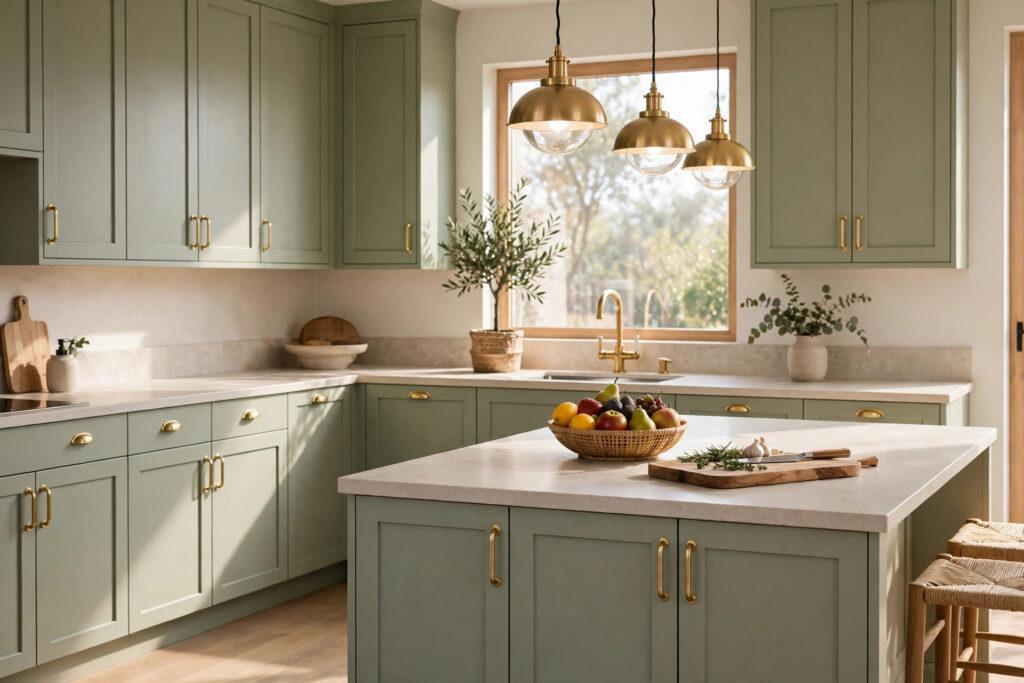
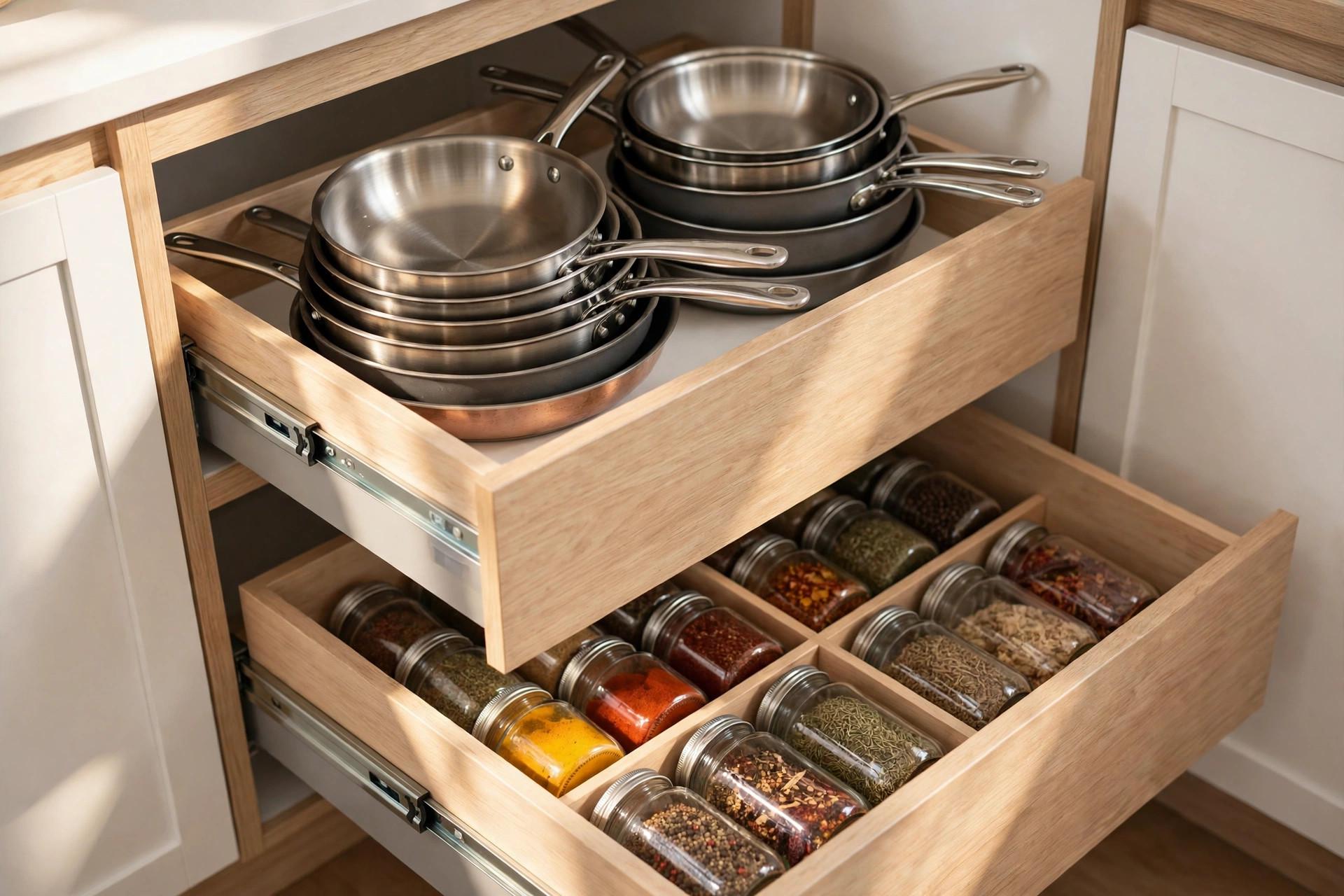
Cabinets set the look and the function of the whole room, so they deserve the most thought. If the carcass is sound, new doors and handles can transform the kitchen for a fraction of the cost of replacement. Soft-close hinges, full-extension drawers and pull-out shelves make everyday use smoother and reduce the bending and reaching that wears you out. For worktops, choose a surface that fits how you cook: a hard-wearing laminate or solid surface for busy family kitchens, and a stone or timber top where you want a warmer feel. Our guide on planning a renovation without the stress explains how to sequence this kind of work so the room stays usable for as long as possible.
Light, Colour and Finishes
Light changes how a kitchen feels more than almost anything else. A single ceiling light leaves shadows over the worktops, so layer the lighting: bright task lights under wall cabinets, a warm general light overhead, and a softer light for evenings. If you can, add light near the sink and the hob, where most of the work happens. Colour works the same way. Pale walls and cabinet fronts make a small kitchen feel larger, while one deeper colour on a single wall or an island adds character without shrinking the room. Durable, wipeable finishes matter here, because steam, splashes and fingerprints are part of daily life. Read our small upgrades that make a big difference at home for more ideas that suit a modest budget.
Appliances and Everyday Practicality
Appliances should earn their place by being used often and working well. Before you replace anything, check whether the current appliance is genuinely failing or simply needs a clean, a new seal or a repair. When you do buy, measure twice: the gap, the door swing and the route into the room. Energy ratings matter over years of daily use, so compare running costs as well as prices. Keep the layout simple too. The sink, hob and fridge work best in a loose triangle with clear worktop between them, so you are never carrying a hot pan across the room. Our home upgrade guide covers more ways to match new fittings to the way your household actually lives.
Small Changes with a Big Effect
Not every upgrade needs a tradesperson. New handles can modernise plain doors in an afternoon, and a fresh splashback protects the wall while lifting the whole look. A rail with hooks frees drawer space, and open shelving for everyday crockery keeps the pieces you reach for most within easy reach. If the floor looks tired, a washable rug or runner adds warmth and hides wear. Even decluttering counts as an upgrade: clear one worktop completely and keep it clear for a week, and you will see how much calmer the room feels. For more low-cost ideas, see our guide to finding good deals and seasonal sales.
Mistakes to Avoid
The most common kitchen mistake is choosing looks before function. A beautiful tap that splashes everywhere, a glossy floor that shows every mark, or a trendy open shelf that fills with grease will annoy you long after the novelty fades. Another mistake is skipping measurements: always measure the room, the appliances and the delivery route, and write the numbers down. Do not order everything at once either. Start with the structural work, then fit cabinets, then choose paint and handles last, when you can see the real colours in the real light. Finally, keep the dining side of the room in mind. Our guide on choosing the right dining set helps you match table and chairs to the kitchen you are building. If you want more practical household ideas, our simple home hacks collection is a good next read.
Conclusion
A successful kitchen upgrade is a series of small, honest decisions rather than one grand gesture. Start with how you use the room, set a budget and keep a reserve, invest in storage and light, and let small changes prove themselves before you spend big. Good kitchen upgrading tips mintpalment are really about that order: function first, then finish, then flair. Follow it, and your kitchen will feel easier to cook in, easier to clean, and nicer to spend time in every day. For the next step, read our room-by-room repair and upkeep guide, our companion piece on kitchen upgrade planning and our guide to upgrades that change how your home feels before you buy anything.