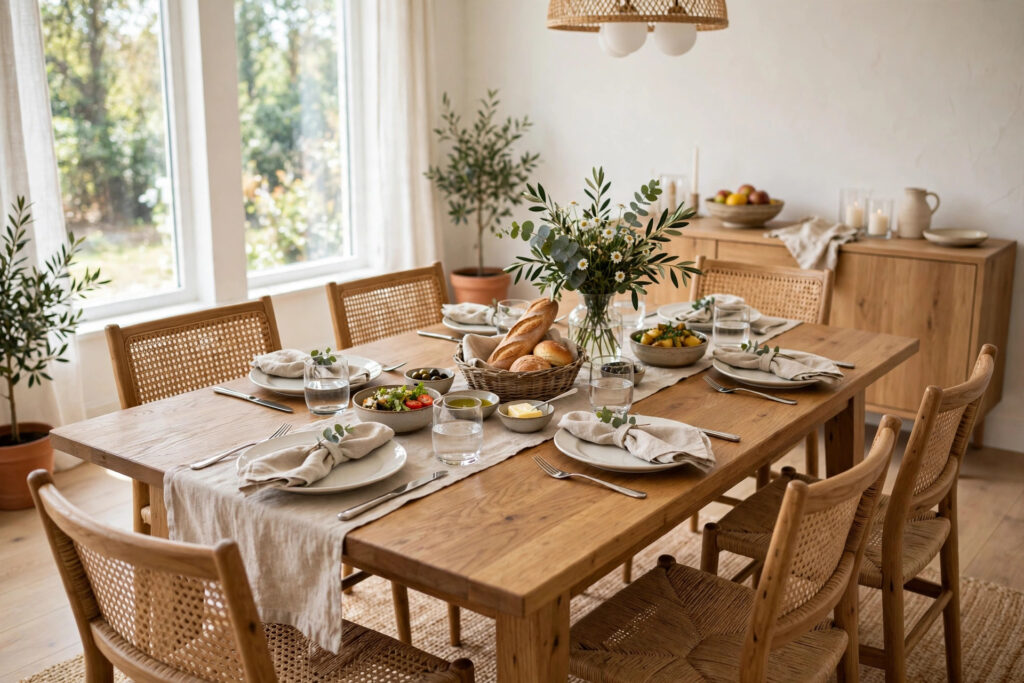
A dining room is where a home slows down. It is where meals, homework, work calls, and long conversations happen, often at the same table. Choosing dining room furniture is therefore not just about looks. It is about size, comfort, material, and how the room will be used every day.
This guide explains how to measure your room, choose a table shape and size, pick chairs that are comfortable for more than ten minutes, and choose materials that will last.
Measure the Room Before You Shop
Start with a tape measure, not a catalogue. Measure the length and width of the room, the height of the ceiling, and the position of doors, windows, and radiators. Note where people walk through the room, because a table that blocks a doorway will annoy you every day.
Allow at least 90 centimetres between the edge of the table and the wall, or any other furniture. That is the space a person needs to pull out a chair and sit down. Allow at least 60 centimetres of table width per person, so elbows do not bump. A table for four needs to be at least 120 centimetres long. A table for six needs to be at least 150 centimetres long. A table for eight needs to be at least 200 centimetres long.
Use masking tape on the floor to mark the outline of the table you are considering. Walk around it, pull out a chair, and open a door. That simple test will tell you more than any photo. A room that feels spacious with tape on the floor will feel spacious with a table. A room that feels tight with tape will feel tighter with furniture in it.
The room itself shapes the choice. A small room needs a lighter table, a round table, or a table with leaves that fold away. A large room can take a long rectangular table, but it will look empty if the table is too small. The same sense of proportion that shapes how furniture choices influence the feel of your bathroom applies here: the furniture must fit the room, not just the floor.
Table Shape: Round, Rectangular, or Square
A rectangular table is the most common choice, and it works well in a long room. It seats the most people for its size, and it is easy to add a leaf to extend it. It also has corners, which can be a problem in a small room or a home with young children.
A round table works well in a square room, and it is good for conversation, because everyone can see everyone else. It has no corners, so it is safer and easier to walk around. A round table seats fewer people for its size, and it is harder to extend, although some round tables have a leaf that makes them oval.
Choosing Chairs That Are Comfortable
A dining chair must be comfortable for at least an hour, not just for a quick sit in a shop. Sit in it, lean back, and check three things: the seat height, the seat depth, and the back support.
The seat height should be about 45 centimetres, so your feet rest flat on the floor and your knees are at a right angle. The seat depth should be about 40 to 45 centimetres, so the front edge does not press into the back of your knees. The back should support your lower back, and it should not force you to sit upright like a soldier.
Armless chairs take up less space, and they are easier to push under the table. Armchairs are more comfortable for long meals, but they need more room. A mix can work: armchairs at the ends of the table, and armless chairs along the sides. That gives comfort where it matters, and space where it is needed.
Materials: Wood, Glass, Metal, and More
Solid wood is the most durable choice, and it ages well. Oak, walnut, and teak are hard, heavy, and expensive, but they will last for decades. Pine is softer and cheaper, but it dents easily. A wood table with a good finish will resist stains, but it will still mark if a hot plate is placed directly on it. Use mats and coasters.
Glass looks light and modern, and it makes a small room feel larger. It shows fingerprints and dust, and it can chip at the edges. A glass table with a metal or wood base is sturdier than a table that is all glass. Metal is strong and easy to clean, but it can feel cold and noisy. A metal frame with a wood top is a good balance.
Decorative touches matter too. A simple centrepiece, a vase, or a branch arrangement can change the feel of a table without changing the furniture. The same eye for detail that makes decorative branches for modern home decor work in a living room can make a dining table feel finished, not bare.
Conclusion
Choosing dining room furniture starts with measuring the room and the table, not with falling in love with a photo. Allow space to sit and walk, choose a shape that fits the room, test the chairs for an hour, and pick a material that suits how you actually live. An extendable table, comfortable chairs, and a simple sideboard will serve a home far better than a beautiful set that is too big, too hard, or too delicate to use.
For help building and caring for what you buy, read How to Assemble Furniture: A Step-by-Step Guide for Beginners and Luxury Furniture: What Makes It Worth the Price? before you order. A wicker coffee table in the next room can echo the same material, how smart branding and furniture design shape modern hospitality spaces shows how balance works at a larger scale, and office furniture trends in 2026 show the same care for proportion and comfort.
Pingback: DecorAdTech Home Devices: The Best Home Devices for a Comfortable Home – Wahson Furniture
Pingback: DecorAdTech Smart Home Ideas: Simple Smart Home Ideas for Beginners – Wahson Furniture