A flat box arrives, you open it, and you face twenty panels, a bag of screws, and instructions that look made for someone else. Learning how to assemble furniture is not about strength or speed. It is about order and patience. Most mistakes happen in the first ten minutes, when a panel goes on backwards or a cam lock is forced the wrong way.
Clear Space and Check the Parts
Clear a space at least twice the size of the finished piece. Lay down a blanket or the empty cardboard box to protect the floor and the panels.
Group the parts: large panels together, small panels together, shelves together, and hardware in one bowl. Count everything against the parts list. If the manual says eight long dowels and you have seven, stop and contact the seller now. It is far easier to get a replacement part now than when the frame is half built. Take a photo of the hardware layout. Assemble the piece where it will live if you can, because moving a tall wardrobe through a narrow doorway later is often the hardest part. Room conditions matter too, because dry air, steam heat, and small spaces can change how wood behaves, and tiny apartments can be hard on furniture.
Read the Instructions First
Read the manual once from start to finish before you pick up a tool. Look for three things: which panel is the top, which side faces forward, and which steps must be done in order.
A panel may look identical on both sides, but one side may have pre-drilled holes for a shelf, or a finished edge that should face outward. A sticker, letter, or number on the edge is often the only clue. Study the cam lock diagram. A cam lock only works when the bolt goes in first, the panels are pushed together, and then the cam is turned to pull the joint tight. Forcing it before the panels meet can crack the panel. Keep the instructions, or photograph each page, for the next move or repair.
Gather the Right Tools
Most flat-pack furniture comes with an Allen key, and that is usually enough. You also need a Phillips screwdriver, a flat-head screwdriver, a rubber mallet, a tape measure, and a spirit level.
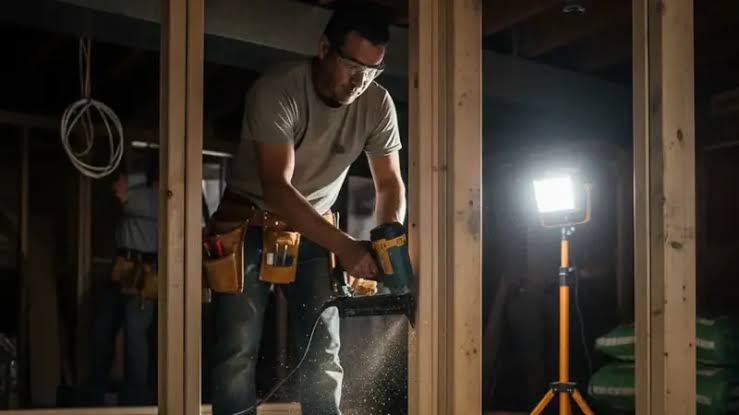
A cordless drill can help, but use it on low torque and finish the last turns by hand. A drill on high power will strip a cam lock or split particleboard in seconds. A rubber mallet taps dowels in without denting the surface. Never use a metal hammer directly on furniture. Lightly mark the inside face of a panel with a pencil, so you do not build a drawer unit with the finished edge facing the wall.
Build the Frame First
Follow the manual’s order: build the base, add the sides, add the back panel, then add shelves, drawers, and doors.
Start with the bottom panel on the floor. Insert the dowels and cam bolts, then join the side panels. Do not tighten the cam locks fully yet. Leave them snug so you can adjust the frame, then tighten in a diagonal pattern once it is square. The back panel is more important than it looks. It is thin, and it is what keeps the whole piece square. Lay the frame face down, check the corners are at right angles, and fix the back panel in place. If it is fitted while the frame is twisted, the piece will wobble forever. Fit shelves from the bottom up, and test each drawer before moving to the next one. Modern manufacturing has changed what is possible, and 3D printing is changing custom furniture. That does not change the rule: check the fit, and do not force a joint.
Fixing Wobble and Stuck Drawers
A piece that wobbles usually has an uneven floor, a loose joint, or a frame that is not square. Put a spirit level on top and check both directions. If the floor is uneven, adjust the feet or put a thin shim under the low leg. Do not saw a leg shorter. You will almost always cut the wrong leg.
If the frame is not square, loosen the cam locks slightly, push the frame until the diagonals are equal, and tighten again. Measure from one top corner to the opposite bottom corner, then the other diagonal. When the two numbers match, the frame is square. A door that does not close usually needs a hinge adjustment, not a new door. Turn one hinge screw a quarter turn at a time and test after each change. A drawer that sticks may have a runner that is not level, or a screw sticking out and catching the side.
Tall furniture should be anchored to the wall, especially in a home with children or pets. Use the anti-tip strap supplied, and fix it into a wall stud, not just plasterboard. Do not drag a finished piece across the floor. Lift it, or put furniture sliders underneath. Dragging puts stress on the joints, and a tight joint can loosen after a single drag. That attention to detail shapes office furniture trends in 2026, and it applies at home too. A well-built piece also fits its room, and how furniture choices influence the feel of your bathroom and how smart branding and furniture design shape modern hospitality spaces show how placement and design work together.
Conclusion
How to assemble furniture comes down to a simple routine: clear the space, count the parts, read the manual, use the right tools, build the frame first, square it before you tighten it, and test the doors and drawers before you call the job done. Do not rush the first steps, do not force a joint, and do not skip the back panel or the wall anchor. Follow that order and you will finish with a piece that is stable, square, and ready to use. For care advice once it is built, read How to Clean Leather Furniture Properly Without Damaging It and Luxury Furniture: What Makes It Worth the Price?
Pingback: Dining Room Furniture: How to Choose the Right Set for Your Home – Wahson Furniture
Pingback: DecoratorAdvice.com Home: Your Complete Guide to Home Decor Ideas in 2026 – Wahson Furniture