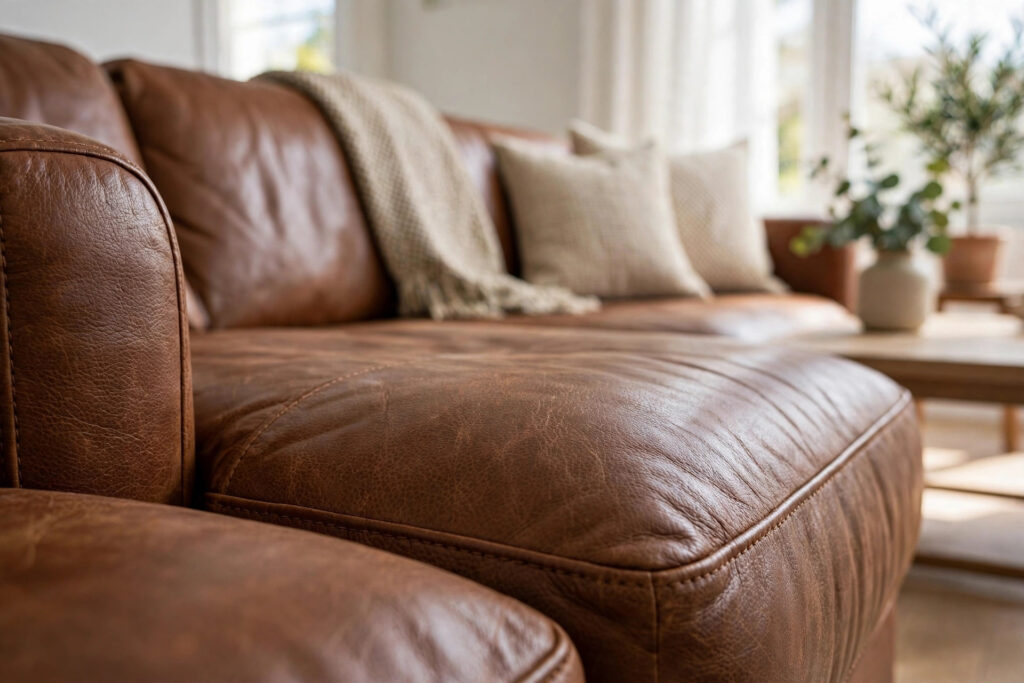
Leather furniture looks better with age, but only if it is cleaned the right way. The wrong cleaner, too much water, or a rough cloth can strip the finish and leave marks that cannot be removed. Cleaning it is not complicated, but it does require patience and a gentler touch than most people expect.
First, Work Out What Kind of Leather You Have
Not all leather is the same, and the cleaning method depends on the type. The most common types are protected leather, aniline leather, and nubuck or suede.
Protected leather has a thin coating on the surface. It feels smooth, it resists light stains, and it is the easiest type to clean. Aniline leather is dyed but not coated. It feels soft and natural, and it shows marks more easily. Water, oil, and sunlight can change its colour. Nubuck and suede have a soft, velvety surface. They are the most delicate. Water will stain them, and a normal leather cleaner will damage them.
Check the label or care tag. If you cannot find the type, test a hidden area, such as the back or the underside of a cushion. Put a single drop of water on that spot. If it beads and sits on the surface, the leather is probably protected. If it darkens and soaks in slowly, it is probably aniline. The room matters too. Leather in a hot room can dry out faster, and steam, dry air, and direct sun can all affect it, and tiny apartments can be hard on furniture. Keep leather away from radiators and windows that get strong afternoon sun.
The Routine Clean: Dust, Wipe, Condition
Clean once a week, for ten minutes. Start by vacuuming with a soft brush attachment. Vacuum the seat, the back, the arms, and the creases where crumbs collect. Use low suction and do not press the nozzle hard into the leather.
Next, wipe the surface with a clean, dry, soft cloth. Microfibre is best. Wipe in long, even strokes, not in circles, because circular wiping can leave swirl marks. Then wipe with a slightly damp cloth, wrung out until almost no water comes out. Use plain water, or a small amount of a leather cleaner made for your leather type. Work in sections, and dry each section before you move on. Do not leave the leather wet. Water that sits on leather can leave a ring, especially on aniline leather.
Condition the leather every three to six months. A conditioner keeps the surface supple and prevents cracking. Put a small amount on a soft cloth, not directly on the leather, and rub it in with long strokes. Leave it to absorb, then buff off any excess with a dry cloth. Too much conditioner is worse than too little. It can leave a sticky layer that attracts dust.
How to Handle Spills
Most leather damage happens in the first minute after a spill, not later. The rule is simple: blot, do not rub.
If you spill water, tea, coffee, or juice, take a clean, dry cloth and press it gently onto the spill. Lift the cloth, turn it to a clean part, and press again. Repeat until no more liquid transfers to the cloth. Do not rub the spot, because rubbing pushes the liquid into the leather and spreads the stain.
For an oil or grease mark, do not use water first. Blot the excess, then sprinkle cornstarch or talcum powder on the mark. Leave it for a few hours. The powder absorbs the oil. Brush it off gently, then wipe with a dry cloth. For ink, blot at once and use a leather cleaner made for ink, working from the outside inward. Test in a hidden spot first. If the ink has soaked in, a professional repair service is better than a stronger chemical.
Scratches, Fading, and What to Avoid
A light scratch on protected leather can often be made less visible. Rub it gently with your finger. The natural oil from your skin, plus the warmth of your hand, can sometimes blend a surface scratch back into the finish. For a deeper scratch, use a leather balm in a matching colour, applied in thin layers. A leather chair in a smart office shows the same point, and how smart branding and furniture design shape modern hospitality spaces explains why finish matters, while a wicker coffee table needs the same gentle dusting as decorative branches for modern home decor.
Fading is usually caused by sunlight. Move the piece away from direct sun, or use curtains during the brightest part of the day. A conditioner will not restore colour that has already faded, but it will stop the leather from drying out further.
Do not use baby wipes, kitchen wipes, or wet wipes, even if they say they are gentle. Many contain alcohol or chemicals that dry out leather. Do not use vinegar, lemon juice, or baking soda paste. Those are acids or abrasives, and they can strip the finish. Do not use a steam cleaner on leather, and do not use a hair dryer to dry a wet spot. Let it dry naturally, away from direct heat. Do not place a leather chair directly next to a radiator or heater. Leave a gap of at least 30 centimetres between the furniture and a heat source. In a damp room, leather needs more care, and how furniture choices influence the feel of your bathroom is a useful reminder that the room and the material have to work together.
Conclusion
How to clean leather furniture properly comes down to three rules: know your leather type, use as little water and cleaner as possible, and blot spills instead of rubbing them. Dust and wipe weekly, condition a few times a year, and avoid harsh chemicals, steam, and direct heat. A leather sofa that is cleaned and conditioned regularly will last far longer than one cleaned only when it looks dirty. See also Vintage Furniture: How to Spot Real Quality Pieces and How to Assemble Furniture: A Step-by-Step Guide for Beginners.
Pingback: How to Assemble Furniture: A Step-by-Step Guide for Beginners – Wahson Furniture
Pingback: Decoration Tips from DecorAdHouse: Simple Ideas to Refresh Every Room – Wahson Furniture