
A smart home sounds complicated, expensive, and full of jargon. In reality, it starts with one small change: a light you can dim from the sofa, a speaker that plays music on request, or heating that switches itself off when you leave. These decoradtech smart home ideas are written for beginners, with no technical background needed and no need to rewire the house. Begin with the annoyance that bothers you most, fix it with one device, and only then think about the next one. A good smart home grows slowly, and every addition should earn its place.
DecorAdTech Smart Home Ideas: Pick One Platform and Start Small
The first decision matters more than the first device. Pick one voice assistant or smart-home platform, such as the one already on your phone, and buy devices that work with it. Mixing three different systems means three apps, three logins, and devices that refuse to talk to each other.
Write down the three daily frustrations you would most like to solve. Rank them, then solve the top one only. If lights win, buy two smart bulbs for the living room and live with them for two weeks. If heating wins, a smart thermostat is the place to start. This slow approach also protects your budget. A single starter device costs less than a takeaway dinner for two, and it tells you whether you actually enjoy controlling things by voice or app before you spend more. Keep the focus narrow: one platform, one problem, one device.
Begin with Lights and a Speaker
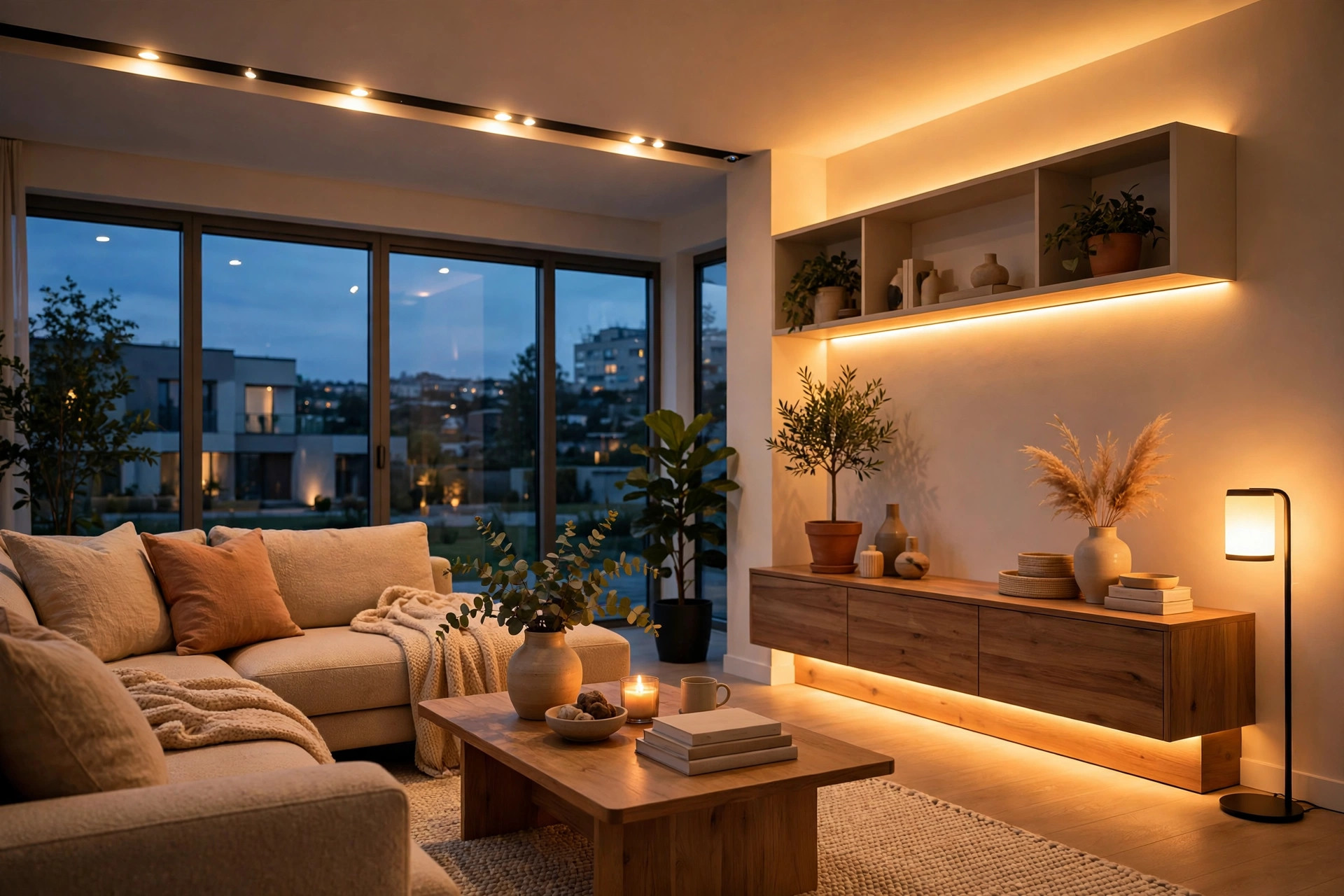
Smart lighting is the friendliest first step because the result is visible the same evening. Replace the bulbs in the two lamps you use most, name them in the app, and set a simple routine: warm and dim after nine, off at midnight, and a soft hallway light if anyone gets up at night.
A smart speaker is the natural partner. It plays music, sets timers while you cook, reads the weather, and controls the lights by voice, which means you do not need to reach for your phone every time. Place it where people gather, usually the kitchen or living room, and keep the volume low enough to talk over. When the room layout changes around new devices, the measuring advice in Dining Room Furniture: How to Choose the Right Set for Your Home is a useful reminder to plan furniture around how the room is actually used. If a new sideboard or unit arrives to hold the speaker, build it properly with How to Assemble Furniture: A Step-by-Step Guide for Beginners rather than rushing the joints.
DecorAdTech Smart Home Ideas for Heating and Everyday Routines
Once lights and sound feel natural, heating is the upgrade that saves the most money. A smart thermostat learns when you wake, when you leave, and when you return, and it stops heating an empty house.
Add simple routines next, because routines are what turn separate devices into a smart home. A “good morning” routine can raise the blinds, start the heating, and play the news. A “good night” routine can lock the door, switch off every light, and lower the heating. A “leaving home” routine can do the same with one command. If a bigger project is on the horizon, plan the wiring and device placement before the work starts by reading DecorAdHouse Renovation Tips: Plan a Home Renovation Without the Stress, so you are not adding smart devices to a room that is about to be rebuilt.
Security That Stays in the Background
Smart security should protect the edges of your home and then stay quiet. A video doorbell is the most useful single security device for a beginner: you can see and speak to visitors from anywhere, and it records a short clip of every visit.
A smart lock removes the spare-key problem, and a temporary code is safer than a key hidden under a mat. Smoke and carbon monoxide alarms that alert your phone are worth fitting, because they protect you when you are away as well as when you are home. Two or three devices at the doors and one alarm per floor is plenty. Check the privacy settings on each device when you install it, turn off microphones or recording you do not need, and set a strong, unique password with two-factor authentication on the app. A smart home that leaks data is not a smart home at all.
Make Technology Disappear into the Room
The final beginner skill is hiding the technology. A home full of glowing hubs, tangled chargers, and blinking lights feels like an office, not a living room.
Choose one drawer or shelf as the charging station and keep every cable there. Pick devices in colours that match the room, and put hubs inside a cupboard or behind a book rather than on display. Comfort is physical too, so look after the furniture the devices live alongside. A leather sofa that is cleaned regularly feels far more inviting than a new gadget on a neglected one; follow How to Clean Leather Furniture Properly Without Damaging It before buying anything new for the room. Outdoors, comfort needs the same care: fresh covers transform old patio chairs, and Replacement Cushions for Outdoor Furniture: How to Measure and Choose explains how to measure them. Smart lighting can extend outside as well, and the seating advice in Outdoor Furniture and Patio: Complete Buying and Care Guide helps you plan a garden that is pleasant after dark. An older piece of furniture can hide a hub or a speaker beautifully, and Vintage Furniture: How to Spot Real Quality Pieces will help you choose one with the quality to last. Spend on the pieces you use daily and let technology serve the room; Luxury Furniture: What Makes It Worth the Price? applies the same judgement to furniture. For device-by-device picks, see DecorAdTech Home Devices: The Best Home Devices for a Comfortable Home, and keep up with new developments in Latest News from DecoratorAdvice: Home Decor Trends and Updates for 2026.
Conclusion
A smart home for beginners is not a project, it is a habit. Choose one platform, solve one daily frustration, start with lights and a speaker, add heating and simple routines, protect the doors, and hide the technology away. Done this way, your home becomes quietly smarter every month, without a big bill, a rewiring job, or a single device you regret.