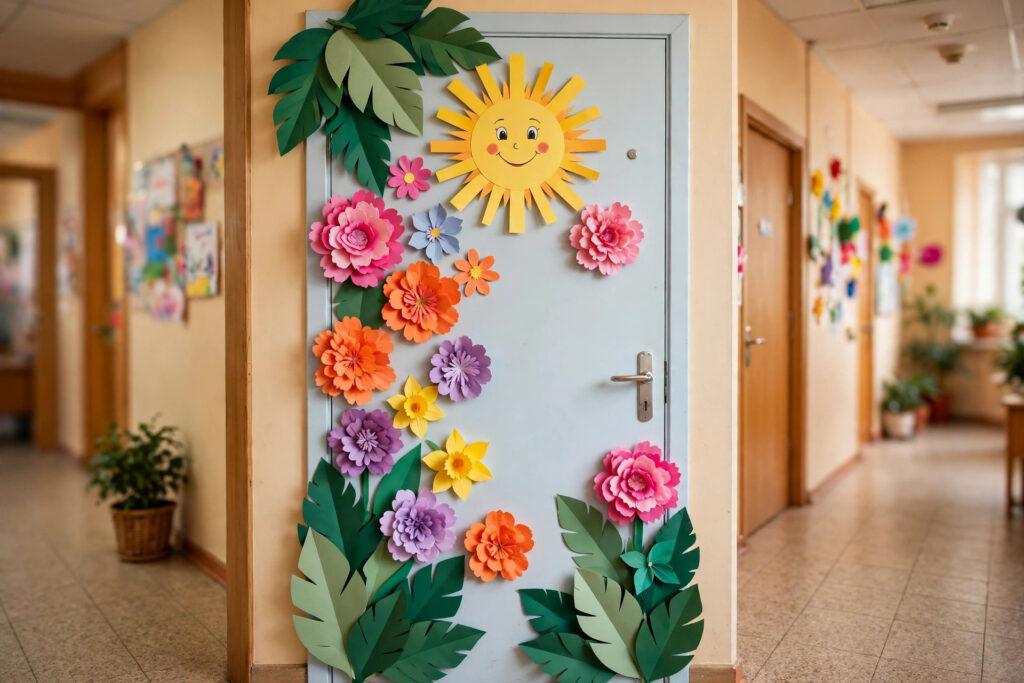
The classroom door is the first thing children see each morning, and it sets the mood for the whole day. A bright, friendly door tells every child that something interesting is waiting inside, while a plain door is simply passed by without a second look. Classroom door decorating is one of the cheapest and happiest jobs in a school: paper, card, and a few craft supplies are all you need, and the whole class can help make it. This guide shares simple, safe ideas for doors that welcome children in, celebrate the season, and show off the class’s own work without taking much time or money.
Start With a Theme Children Love
A good door starts with one clear theme that children can recognise in a second. A reading tree with paper leaves, a rocket ship flying to the stars, a garden full of paper flowers, or an underwater scene with paper fish all work well, because children can add their own piece to the picture. Pick a theme that matches what the class is learning: a book the children love, a science topic, or a season of the year. Keep the background simple — one plain colour of backing paper — so the children’s work stands out instead of getting lost in a busy design. Soft materials suit a classroom best, and our felt decoration ideas show how fabric shapes can be cut, glued, and reused all year. Add a short, friendly title in big letters, such as “Welcome to Our Class” or “Come and Read With Us”, so even the youngest children know the door belongs to them.
Paper Crafts, Letters and Borders
Paper is the heart of classroom door decoration, because it is cheap, safe, and easy for small hands to cut and colour. Make big letters from coloured card so the title can be read from down the corridor, and border the door with a simple paper frame in one bright colour. Paper flowers, stars, leaves, and animals can be made in an afternoon, and each child can make one piece to add to the display. Laminate the pieces if the door faces a busy corridor, so the display survives little hands and passing bags. Classroom door decorating works best when the class makes it together, because children look after a display they helped to build. Keep a small box of spare paper near the door so a damaged piece can be replaced in minutes. For ideas on mixing handmade work with a plain background, see our decorative arts guide, which shows how simple craft can lift a plain space.
Seasonal Doors Through the Year
A door that changes with the seasons keeps children excited all year. In autumn, paper leaves, pumpkins, and harvest baskets suit the door; in winter, snowflakes, evergreens, and warm candle pictures make the entrance feel cosy. Spring calls for flowers, butterflies, and bright rainbows, while summer suits suns, beaches, and holiday pictures. Classroom door decorating at its best follows the year, so keep the display simple enough to change in one afternoon. A seasonal display is also a gentle way to teach children about the year: ask them what they see outside the window, then let them draw it for the door. In winter, warm colours and evergreen shapes work beautifully, and our yule decorations guide has simple natural ideas that suit a classroom. A ready-made set can help too: our Christmas decorations with fir cones ideas show how natural materials can be used in a simple display. Keep seasonal pieces in a labelled box after they come down, so next year’s door takes half the time to make.
Show Off Children’s Work
The best classroom doors are the ones that display the children’s own work. A poem, a drawing, a photograph of a class project, or a “star of the week” panel turns the door into a celebration instead of a poster bought from a shop. Change the display regularly so every child gets a turn: a simple roster on the wall beside the door makes the sharing fair and easy to manage. Mount each piece on a coloured card frame so even a quick drawing looks proud and finished, and keep the pieces at a height children can reach and read. Simple wall detail can give the display a proper frame, and our guide to decorative wall molding explains how a plain surface gains depth with a little care. For more small-space inspiration, see our home decor ideas — many of the same ideas work on a classroom wall. Always ask a child before displaying their work, and keep names off the corridor side of the door if the school prefers privacy.
Safe, Simple and Reusable
Safety comes first on a school door. Never cover the door’s window, handle, or hinges, and never let paper hang over the edges where it could catch on a passing bag or coat. Use Blu Tack, masking tape, or removable hooks instead of staples or strong glue, so the door can be cleaned and the display changed without damage. Avoid anything that dangles into the corridor at head height, and keep glitter and small loose parts away from younger children’s displays, where they can fall and be picked up. Reusable pieces save time and money: laminate the title letters and the border, store them flat in a folder, and only the children’s pieces need to change. A calm, tidy display also helps children settle, and our interior decoration tips explain how a balanced look keeps a room feeling peaceful. A decorating a console table display near the door can hold a welcome book or a small plant for the same warm effect.
Conclusion
A classroom door does not need a big budget or a perfect design — it needs a friendly theme, a little colour, and the children’s own work. Start with one plain background, add a title the children can read, and let the class build the rest together. Classroom door decorating works best when it is shared, seasonal, and safe, so keep the pieces simple, store the good ones, and change the display often enough that every child sees their work on the door. A door made this way does more than decorate a corridor: it tells every child, before they even step inside, that this is a place where their work matters. For more hanging and display ideas, see our ceiling decor hanging guide and our Halloween witch decor display.
Pingback: Halloween Witch Decor: Spooky and Stylish Ideas for a Bewitching Home – Wahson Furniture