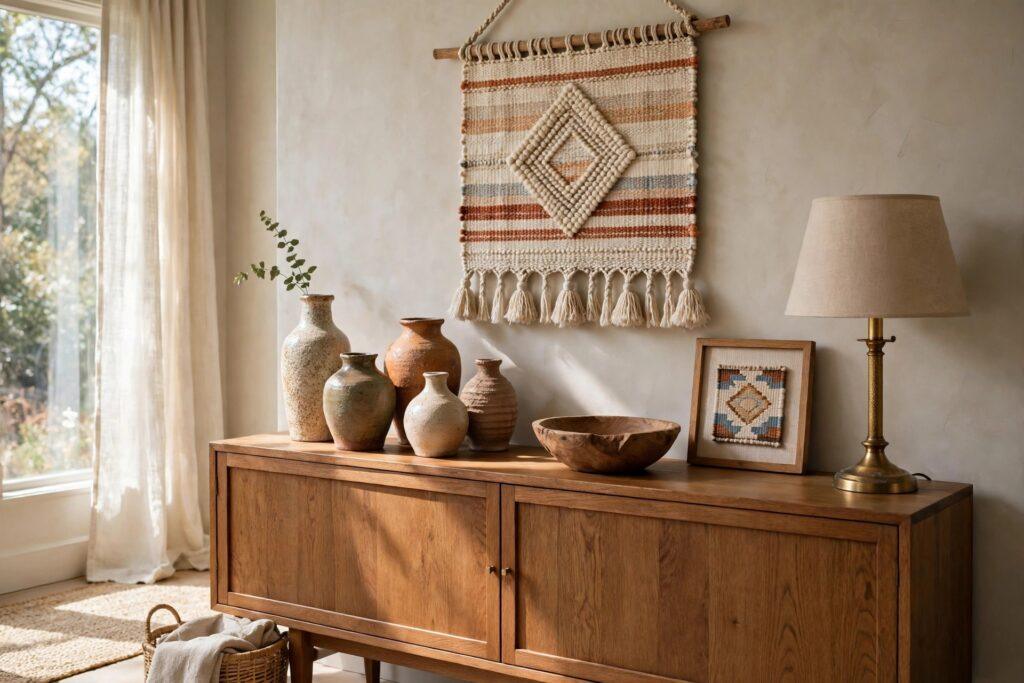
A home feels most welcoming when the objects in it were made with care. Decorative arts bring that feeling into everyday rooms, from a hand-thrown ceramic vase on a sideboard to a woven wall hanging, a carved wooden bowl, or a piece of stained glass that catches the afternoon light. These are useful, touchable things that make a room warmer, more personal, and more interesting to live in. You do not need a large budget or a design degree to enjoy them. This guide explains what to look for, where to place handmade work, and how to mix it with the furniture you already own.
What Handmade Craft Means at Home
The term covers the crafts that make everyday objects beautiful: pottery, weaving, woodwork, glass, metalwork, and embroidery. Unlike a painting hung only to be looked at, these pieces are meant to be used — a bowl that holds fruit, a basket that stores blankets, a lamp that lights a reading chair. Start by noticing what you already own: a handmade mug, a woven throw, a wooden tray passed down in the family. Those pieces are the beginning of a collection, and they tell visitors something true about the people who live there. For a wider view of current styles, see our latest decoration trends and our interior decoration tips. Choose pieces you genuinely like, not pieces you think you should like, and your home will feel honest rather than staged.
Pottery, Ceramics and the Handmade Touch
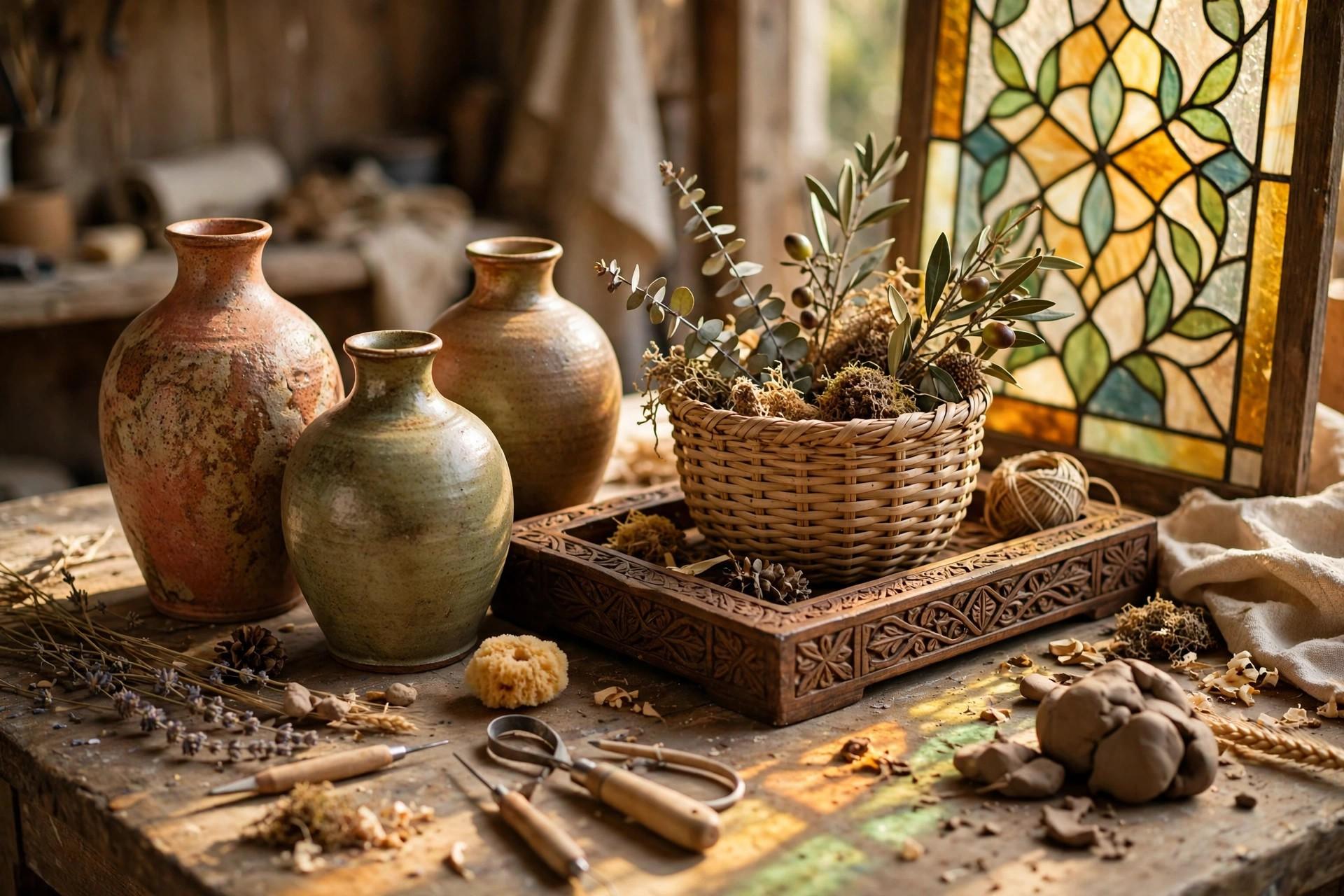
Pottery is often the easiest place to start. A hand-thrown vase, a glazed bowl, or a set of mugs brings texture and colour to a shelf, a table, or a kitchen counter, and no two handmade pieces are ever exactly alike. Look for glazes in earthy tones — cream, sage, terracotta, and soft blue — that sit comfortably beside wood and linen. Group two or three pieces of different heights together rather than scattering single items around the room, and leave some empty space around them so each piece can be seen. A metal wall decoration nearby can balance the softness of clay with a harder, cooler surface. Avoid overfilling shelves: a few good pieces with breathing room look far more expensive than a crowded shelf.
Textiles, Weaving and Warmth
Woven textiles bring softness that hard furniture cannot. A handwoven wall hanging, a patterned cushion, a woollen throw, or a braided rug adds colour, pattern, and warmth in one move. Hang a textile where it can be seen from the doorway, and keep it out of direct sunlight so the colours stay true. Mix textures rather than matching everything: a rough linen cushion beside a smooth ceramic vase, or a soft wool throw over a plain wooden chair, makes a room feel layered and lived in. Our simple ideas to refresh every room show how one textile change can lift a whole space. Decorative arts made from fibre are also practical — a basket holds magazines, a woven tray carries cups, and a rug softens a cold floor.
Wood, Glass and Metal in Balance
Wood, glass, and metal give a room its structure, and handmade versions of each feel warmer than factory-made copies. A carved wooden bowl, a turned lamp base, or a simple oak tray shows the grain of the timber and the hand of the maker. Glass brings light: a stained glass panel in a window, a hand-blown vase on a sill, or a set of coloured bottles on a shelf catches the sun and throws gentle colour across the room. Metal adds contrast — brass, copper, and iron look best when they are allowed to age a little rather than kept polished to a shine. Our interior design tips can help you place these pieces so the room still feels calm. A decorative cork board in a study or kitchen is a useful handmade-style accent too, holding notes and photos in a natural, warm material.
Choosing Pieces That Suit Your Room
Before buying anything, look at the room with fresh eyes. Note its colours, its light, and the furniture that must stay, then choose craft that fits that room rather than fighting it. A large, bold vase suits a spacious sideboard, while a small room needs smaller pieces and more empty space. Set a simple budget and buy slowly — one good piece a month teaches you more about your taste than a single hurried shopping trip. Decorative arts reward patience: the right piece often appears when you are not looking for it, at a market, a craft fair, or a small local shop. A decorative wall moulding detail can frame a handmade textile beautifully, giving it the same respect a painting would receive. If a piece does not fit anywhere after a week, move it to another room before deciding to let it go.
Mixing Handmade Work With Modern Furniture
Handmade craft does not need a rustic cottage to look right; it sits happily beside modern furniture. A ceramic vase on a plain white shelf, a woven throw on a grey sofa, or a wooden bowl on a glass coffee table adds warmth to a clean, simple room. Keep the number of craft pieces in one room to a handful, so each one stands out, and repeat one colour or material in two places to tie the room together. A decorative lamp shade in linen or paper softens a modern lamp and warms the light it gives. For broader inspiration, our home decor ideas show how mixed styles can share one room comfortably. A western wall decor piece, such as a tooled leather panel or a woven hanging, can add a bold accent to a plain wall without overwhelming the space around it.
Conclusion
Handmade craft makes a house feel like a home because every piece carries the time, skill, and care of the person who made it. Start small, choose pieces you love, and give each one space to be seen. Decorative arts do not demand a perfect room or a large budget — they only ask for a little attention, a little patience, and a willingness to live with things that are beautiful and useful at the same time. Add one piece at a time, and let your home grow more personal with every choice.