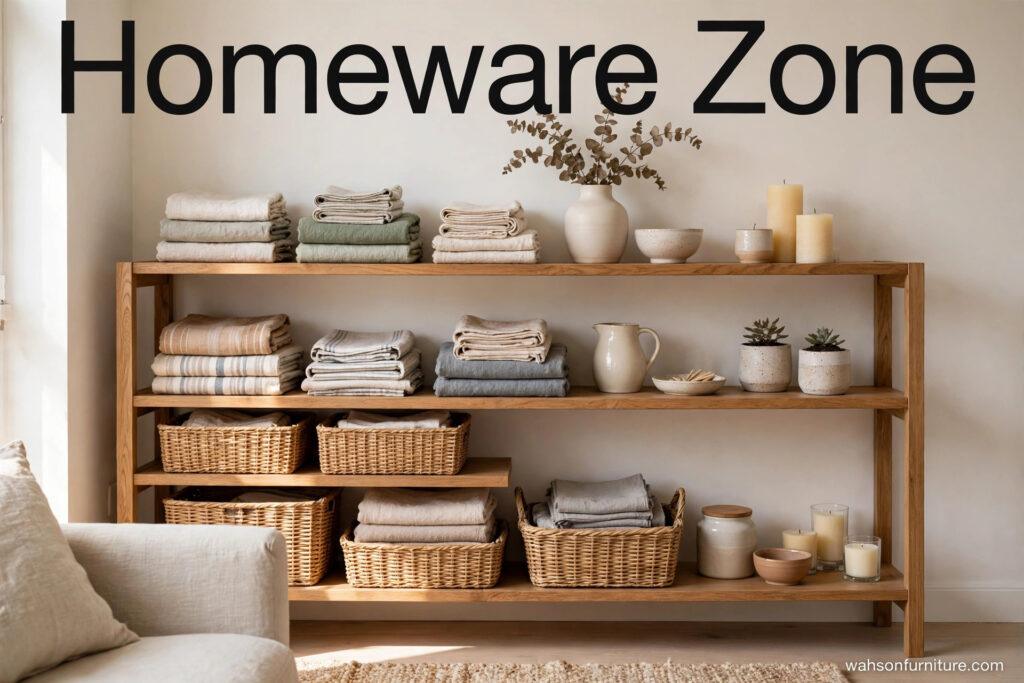
Every home has a handful of things that get used every single day: the mugs, the throws, the candles, the baskets, the cleaning cloths, the spare batteries and the bits and pieces that never seem to have a proper place. When those things are scattered across rooms and drawers, the house always feels slightly untidy, even after a good clean. A homeware zone fixes that by giving everyday essentials one defined home. It is simply a small, dedicated area — a shelf, a cupboard section, or a corner of a room — where the things you reach for most often are kept together, easy to see and easy to put back. This guide shows how to set one up and keep it working.
What the Zone Actually Is
The idea is borrowed from the way good shops arrange their shelves: similar things together, everything visible, nothing buried. At home, the same thinking turns a messy drawer into a calm, useful spot. A zone does not need to be large. For many homes, one shelf in a hallway cupboard, one section of a kitchen dresser, or the top of a sideboard is enough. Start by listing the items you reach for daily and honestly ask which of them currently live in three or four different places. Those are the items that belong together. For a wider view of how rooms are balanced, see our home decor ideas guide, which shows how small, practical changes can make a whole room feel calmer.
Choosing the Right Spot
Pick a spot you pass every day, because a zone that is out of the way will be forgotten within a week. Hallways, the end of a kitchen counter, and the shelf nearest the front door all work well. Avoid damp corners, places in direct sunlight that could fade fabrics, and any spot where the zone would block a walkway. Measure the space before you buy or move anything: a basket that is two centimetres too wide will sit in the hallway for months, and a shelf that is too deep will hide things at the back. Think about who uses the things, too. If children fetch their own school items, keep their zone low enough for them to reach. If the zone holds candles or matches, keep it high and out of reach of small hands. A homeware zone works best when it suits the people who actually use it, not just the way it looks in a photograph.
What Belongs in the Zone
Keep the list short. A zone that tries to hold everything ends up holding nothing well. Everyday essentials usually fall into a few groups: things you use daily, things you grab on the way out, and things you need in a hurry. Daily items might include mugs, coasters, a favourite throw, and the remote controls. Grab-and-go items are keys, a torch, reusable bags, and the dog lead. In-a-hurry items are spare batteries, a small first-aid kit, tape, and a notepad. Group the items by use rather than by size, and give each group its own basket or tray. If you want fresh ideas for refreshing the rooms around the zone, our decoration tips cover simple changes that work in every room.
Storage That Keeps It Tidy
Baskets, trays and boxes are the quiet heroes of a tidy home, and the material matters less than the fit. Wicker and fabric baskets suit living rooms and bedrooms; lidded boxes suit cupboards where dust is a problem; open trays suit hallways where you need to see everything at a glance. Use the same style of container across the zone so it looks planned rather than thrown together, and avoid mixing more than two materials in one small area. For advice on grouping and arranging small objects, our interior decoration tips explain how colour, light and texture work together. A small cork board on the wall beside the zone can hold the notes, lists and reminders that would otherwise drift onto the kitchen counter; our decorative cork boards guide shows how to choose one that fits the room.
Styling Without Clutter
A zone should look good enough that you want to keep it tidy, but it is not a display shelf. The rule is simple: if an item is not used at least once a week, it does not belong in the zone. Keep one small decorative touch, such as a plant or a single framed print, so the area feels cared for rather than purely practical. Colour helps, too: choose containers in one or two calm colours that match the room, and the zone will blend in instead of shouting for attention. A homeware zone that looks calm is a zone that stays calm, because everyone in the house can see at a glance when something is out of place. The books on a nearby shelf can follow the same thinking, and our guide on how to organize a bookshelf shows how to sort, group and display books so they are easy to find and pleasant to look at.
Keeping the Zone Working
The hardest part is not setting the zone up, it is keeping it honest. Once a month, take everything out, wipe the shelf, and put back only what is still used. Anything that has not been touched in a month goes to a different home or out of the house. If a new item arrives, ask what it replaces — a zone that only grows will eventually overflow. Involve the whole household: when everyone knows where things live, everyone puts them back, and the zone stops being one person’s job.
Conclusion
Start small, keep the list short, and let the zone earn its place. A homeware zone is not about buying new storage or following a trend; it is about deciding, once, where everyday things live, and then keeping that promise. Do that, and the house feels calmer, mornings run more smoothly, and the small daily search for keys, chargers and candles simply stops happening.