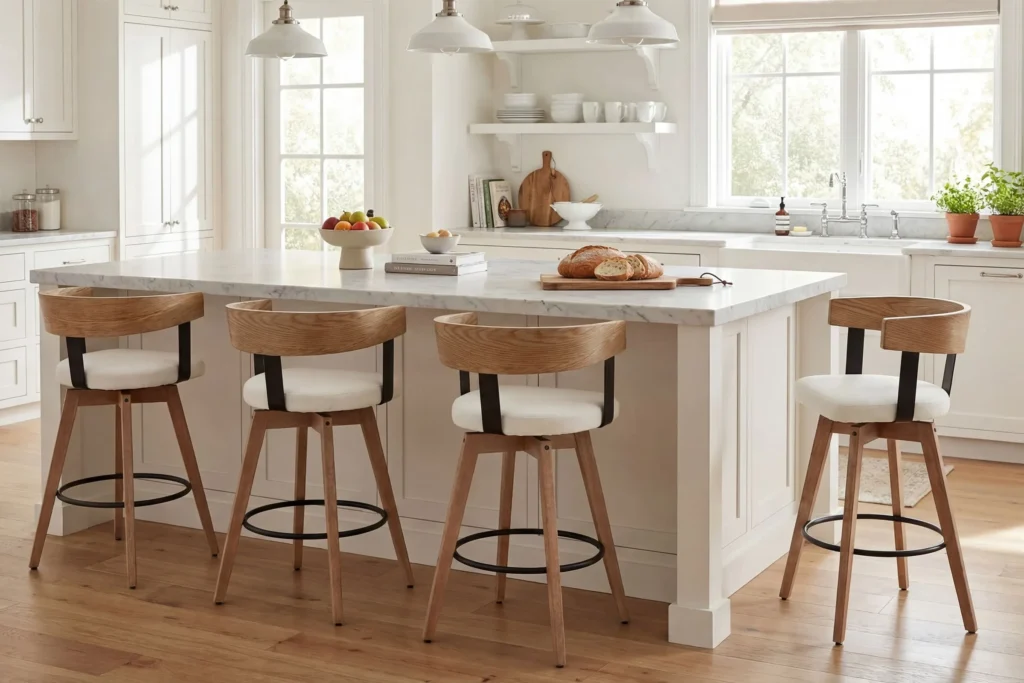
The kitchen island has quietly become the heart of the modern home. It is where the morning coffee gets poured, where kids spread out their homework and where friends gather with a drink while dinner cooks. Yet the stools around it are often the last thing people think about.
Pick the wrong height and knees bump the counter. Squeeze in too many and nobody gets comfortable. Choose a flimsy design and it starts to wobble within months. The good news is that getting it right comes down to a handful of simple decisions. Here is how to make them.
Step 1: Measure your counter height
Bar stools come in a few standard heights, and matching the stool to your counter is the most important decision you will make.
- Counter height stools: seat height of about 24 to 26 inches, for counters 35 to 37 inches high. Most kitchen islands fall into this range.
- Bar height stools: seat height of about 28 to 30 inches, for bars and high top tables around 40 to 42 inches.
- Extra tall stools: seat height of about 33 to 36 inches, for counters higher than 43 inches.
A simple rule to remember: leave 10 to 12 inches between the top of the seat and the underside of the counter. That gives your legs room without making the counter feel too high for eating.
Step 2: Work out how many stools fit
Allow 24 to 26 inches of counter length per stool, measured from the center of one seat to the center of the next. Wider stools, swivel stools and stools with arms need closer to 28 to 30 inches. In practice, a 6 foot island usually seats three people comfortably.
Check the overhang too. You need around 12 inches of knee space under a counter height island and about 15 inches under a bar height counter. Without it, guests end up sitting sideways.
Step 3: Decide on backs, arms and swivels
- Backless stools tuck fully under the counter and keep the room visually open. They are ideal for smaller kitchens and quick breakfasts.
- Low back stools offer a little support while keeping sightlines clear across the room.
- Full back stools are the best choice if your island is where the family actually eats meals or lingers for hours.
- Arms add comfort but take up more width and may not slide under the counter.
- Swivel seats make it easier to get on and off and to turn toward the conversation.
Step 4: Choose materials that handle real life
A kitchen stool deals with spills, sticky fingers and constant use, so material matters as much as style.
- Metal: durable, easy to clean and a natural fit for modern or industrial kitchens.
- Wood: warm and timeless, and it suits farmhouse, Scandinavian and traditional spaces.
- Upholstered: the most comfortable option. Look for performance fabric or faux leather that wipes clean.
- Rattan or woven: a relaxed, coastal feel that works best for lighter use.
Here is a tip borrowed from the hospitality world. Restaurants and bars choose seating that can handle hundreds of guests every week, and more homeowners are now buying commercial grade bar stools for their kitchens for exactly that reason. With welded frames, stronger joints and tougher finishes, they stay steady for years, even in a busy family home.
Step 5: Match the style to your kitchen
- Modern: slim metal frames, clean lines and black or brushed brass finishes.
- Farmhouse: wooden seats, cross back designs and natural or distressed finishes.
- Industrial: metal frames with wooden seats and exposed hardware.
- Coastal: light woods, rattan and white or soft blue upholstery.
- Transitional: upholstered stools in neutral tones on simple wood or metal legs.
Contrast can work just as well as matching. A dark stool against a white quartz island makes a bold statement, while a natural wood stool softens a sleek, all white kitchen.
Step 6: Think beyond the island
The same rules apply if you are creating a home bar, a breakfast nook with a high top table or a basement entertainment space. You can even build a bar height table to suit your stools exactly: pairing a sturdy base with a custom table top in solid wood or laminate lets you choose the precise size and finish your room needs.
Step 7: Protect your floors and your investment
- Add felt pads or nylon glides to the feet to prevent scratches on hardwood and tile.
- Tighten screws and bolts every few months to stop wobbling before it starts.
- Clean upholstery according to the manufacturer’s directions.
- Wipe metal and wood with a damp cloth and mild soap rather than harsh chemicals.
Final thoughts
The right bar stools make your kitchen island more comfortable, more useful and far more inviting. Measure carefully, plan for proper spacing, choose materials that suit how you really live and pick a style that ties the room together. Get those decisions right, and your island will become the spot where everyone wants to sit.
About the author: Written by the team at Vogue Decor, a Canadian manufacturer of commercial grade chairs, bar stools, tables and outdoor furniture for restaurants, bars, hotels and homes that want furniture built to last.