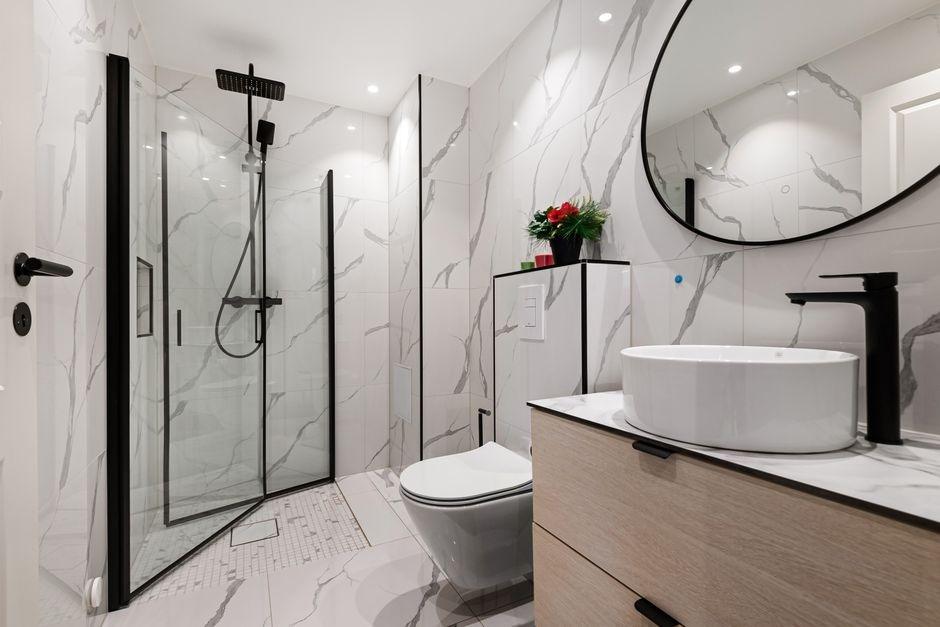
If your bathroom feels cramped, dated, or awkward to use, you’re not imagining it. Small bathrooms often waste space through poor layout choices, oversized fixtures, and weak lighting. In a coastal city like Virginia Beach, where humidity, salt air, and busy family living shape home maintenance decisions, smart bathroom planning matters even more. You don’t need a huge footprint to get a bathroom that looks clean, works better, and holds up well over time.
Start by Measuring How You Actually Use the Room
A small bathroom rarely fails because of size alone. Most problems come from daily friction: the door hits the vanity, storage is too shallow, or two people can’t move through the space without bumping into each other.
Before picking tile or paint, track how you use the room for a few days. Notice where clutter gathers, where moisture lingers, and which fixtures feel oversized. That gives you functional data, not just aesthetic opinions.
This step matters because a 30-inch vanity may look great in a showroom but feel bulky in a narrow room. The same goes for deep medicine cabinets, swing doors, and tall storage towers. A successful remodel often starts with circulation paths, clearances, and moisture management, not finishes.
Choose a Layout That Cuts Visual and Physical Clutter
In small bathrooms, the floor plan does most of the heavy lifting. If your layout forces awkward turns or blocks sightlines, the room feels tighter than it is.
Wall-mounted vanities, corner sinks, and curbless showers can open up movement and reduce visual bulk. Pocket doors also solve a common space problem, especially in older homes where swing clearance steals usable square footage.
If you’re comparing options for bathroom remodeling Virginia Beach, pay attention to whether the remodeler focuses on layout efficiency or only surface upgrades. In a humid coastal market, you also want materials and construction methods that handle repeated moisture exposure well. Better spacing, easier cleaning, and durable detailing tend to matter more than dramatic design trends in compact bathrooms.
Pick Fixtures That Fit the Scale of the Room
One of the quickest ways to ruin a small bathroom upgrade is by choosing fixtures that are slightly too large. Even a few extra inches in vanity depth or toilet projection can change how the room functions.
Look for compact, high-performance fixtures with dimensions that suit the footprint. A shallower vanity with drawer storage often works better than a bulky cabinet with wasted interior space. A sliding shower door may outperform a hinged one if clearance is tight.
Also think about maintenance. Matte black can look sharp, but it shows hard water spotting more easily in some homes. Floating vanities simplify floor cleaning. Comfort-height toilets may be helpful for accessibility, though they need to be balanced against overall room scale. Good product selection is about fit, ergonomics, and upkeep, not just style.
Use Light and Surfaces to Make the Room Feel Larger
You can’t stretch the walls, but you can change how the room reads visually. Light, reflection, and surface continuity have a major effect on perceived size.
Large-format tile reduces grout lines, which helps a small bathroom feel less busy. A full-width mirror can expand sightlines immediately. Recessed lighting and sconces placed at face level improve visibility without crowding the ceiling plane.
If your bathroom has no natural light, use layered illumination instead of relying on a single overhead fixture. Ambient, task, and accent lighting each serve a purpose. Moisture-rated LEDs are especially useful in coastal environments because they perform efficiently and hold up well. Keep contrast controlled; too many competing finishes can make a compact room feel chopped up and restless.
Build Storage Into the Architecture, Not Around It
Freestanding organizers usually make small bathrooms worse. They eat up floor area, collect dust, and give the room a temporary look.
A better move is integrated storage. Recessed niches in the shower, medicine cabinets set into the wall cavity, toe-kick drawers, and vanity organizers all help you store more without adding visual noise. Even a narrow vertical pull-out can be valuable in a tight footprint.
Think in categories: daily-use items, backups, linens, and cleaning supplies. Then assign each category a real place. Open shelving can work, though it demands discipline and often looks cluttered fast. Closed storage tends to perform better in family bathrooms. In practical terms, storage design influences how calm and usable the room feels every single day, long after the tile decisions stop feeling new.
Prioritize Materials That Can Handle Moisture and Wear
Bathrooms take a beating. Steam, splashing, cleaning chemicals, and constant temperature shifts all affect performance. In Virginia Beach, coastal humidity adds another layer to the equation.
That means your material choices should be based on durability as much as looks. Porcelain tile, quartz countertops, quality ventilation, and mildew-resistant paint usually outperform trend-driven materials that need extra care. If you want wood tones, use products designed for wet environments rather than forcing natural wood into a role it may not handle well.
Pay close attention to grout, caulk lines, and substrate prep. Those hidden details determine whether your remodel ages well. Waterproofing systems behind tile matter more than the tile itself. A polished bathroom that starts failing around the edges after a year was never truly finished to a high standard.
Don’t Ignore Ventilation and Airflow
Ventilation is one of the least glamorous parts of a bathroom remodel, yet it affects comfort, hygiene, and lifespan. If your mirror stays fogged long after a shower or paint keeps peeling, airflow is probably underperforming.
A properly sized exhaust fan with the right sone rating and ducting setup can help control humidity and reduce mold risk. This is especially important in smaller bathrooms where moisture concentration builds quickly.
If you’re already opening walls, that’s the right time to address hidden ventilation issues. Some homeowners invest heavily in finishes but skip air management, which shortens the life of the remodel. Quiet operation matters too. A fan that sounds like a shop vacuum often gets used less, and inconsistent use defeats the whole system.
Plan Around Budget Reality, Not Wish Lists Alone
A smart bathroom remodel balances ambition with sequencing. You may want heated floors, a custom shower enclosure, premium tile, and new plumbing lines, but fitting all of that into a compact-bath budget takes trade-offs.
Separate your list into non-negotiables, high-impact upgrades, and nice-to-haves. Waterproofing, ventilation, and layout fixes should usually rank above decorative extras. If your budget is limited, spend where performance and daily function improve most.
It also helps to ask contractors how allowances are structured. Low initial estimates can hide upgraded fixture costs, tile labor, or demolition surprises. In older homes, plumbing and subfloor issues are common scope changers. A realistic contingency can keep your project moving without rushed decisions. The goal isn’t just a pretty room. You want a bathroom that works better every morning and stays easier to maintain over the years.