
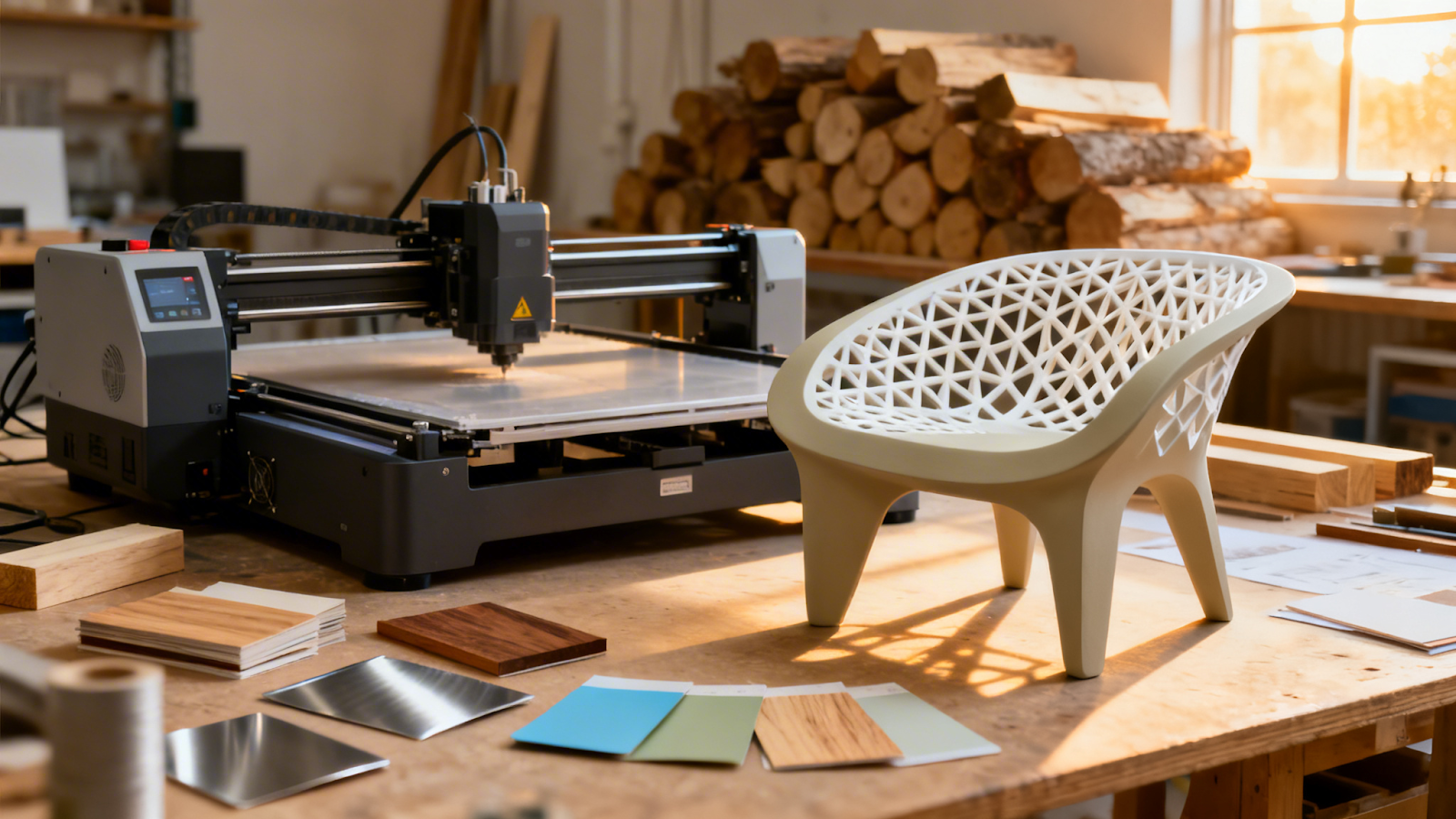
Furniture design is no longer limited to traditional woodworking and mass production. With advances in additive manufacturing, designers and manufacturers are now creating customized, lightweight, and structurally innovative pieces that were once impossible to build. In a growing design focused city like Brisbane, this shift is opening new opportunities for architects, interior designers, and furniture startups who want flexibility without compromising quality.
The Rise of Digital Furniture Design
Modern furniture begins with digital modeling. Designers use advanced CAD software to experiment with complex geometries, organic curves, and lattice structures that reduce material use while maintaining strength. Once finalized, these digital files can move directly into production without expensive molds or tooling.
This workflow dramatically shortens development time. Instead of waiting months for prototypes, designers can evaluate scale, comfort, and structural integrity within days. For custom furniture projects such as boutique office fit outs or hospitality interiors, speed and precision make a significant difference.
Sustainable and Material Efficient Production
Sustainability is becoming a major focus in Australia’s design industry. Additive manufacturing supports this shift by minimizing waste. Unlike subtractive processes that cut away material, 3D printing builds furniture components layer by layer, using only the material required.
Recycled polymers, biodegradable composites, and even concrete based blends are now being used for structural furniture elements. In Brisbane, where environmentally conscious design is gaining attention, 3D printing allows creators to align innovation with sustainability goals.
Customization for Commercial and Residential Spaces
One of the strongest advantages of local additive manufacturing is customization. Businesses can produce one off reception desks, decorative panels, lighting structures, or modular seating systems tailored to specific spaces. Homeowners can also request personalized pieces that reflect their aesthetic preferences without the cost of large production runs.
Brisbane 3D printing services are increasingly supporting furniture designers who need rapid prototyping, short run production, and detailed finishing. This local capability reduces shipping delays and enables closer collaboration between designers and manufacturers.
Complex Structures with Practical Strength
3D printing enables the creation of internal lattice frameworks that maintain durability while reducing weight. This is especially valuable for large furniture pieces such as tables, shelving units, and display installations. The result is structurally sound furniture that is easier to transport and install.
Additionally, hybrid production methods are becoming popular. Designers combine printed components with wood, metal, or upholstery to achieve both aesthetic appeal and mechanical reliability.
The Future of Furniture Innovation in Brisbane
As demand for bespoke interiors grows, additive manufacturing is likely to play a larger role in Brisbane’s furniture sector. From architectural installations to ergonomic workspace solutions, 3D printing offers the flexibility modern designers need to stay competitive. The combination of digital precision, sustainable practices, and rapid production makes it a strong alternative to traditional fabrication methods.
FAQs
Is 3D printed furniture durable enough for everyday use?
Yes. When designed correctly and produced with industrial grade materials, 3D printed furniture can offer excellent strength and long term durability. Many pieces are engineered with reinforced internal structures to improve load bearing capacity.
Is 3D printed furniture more expensive than traditional furniture?
For mass produced items, traditional manufacturing may still be cheaper. However, for custom, short run, or highly detailed pieces, 3D printing can be more cost effective because it eliminates tooling and mold costs.
Can 3D printed furniture be combined with other materials?
Absolutely. Many designers integrate printed components with timber, metal frames, glass, or upholstery to enhance both aesthetics and functionality. Hybrid designs are becoming increasingly common in commercial and residential interiors.
For more information on 3D printing projects, visit KAD 3D.
 Sahil
Sahil