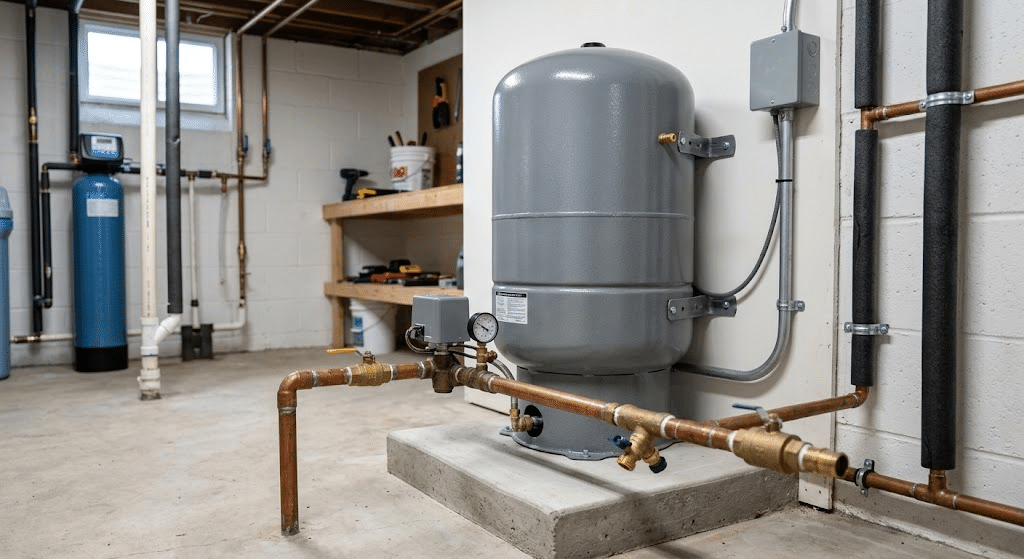
A private well can provide a dependable water supply for many years, but its individual components do not all wear out at the same rate. The well casing may remain in service for decades, while a pump, pressure tank, electrical control, or water filter may need attention much sooner.
Understanding well component lifespan helps homeowners plan for repairs, recognize early warning signs, and avoid unexpected expenses. It also makes it easier to decide whether a component needs maintenance, repair, or replacement.
There is no fixed expiration date for every well system. Equipment quality, installation, groundwater conditions, household water use, and maintenance habits all affect how long each part lasts. The best approach is to track the age and condition of your equipment rather than waiting for a complete failure.
Why Every Part of a Well System Ages Differently
The Well, Pump, Tank, and Controls as a System
A private well is made up of several connected components. Each has a different job, but all must work together to deliver water at a reliable pressure.
The main components usually include:
- Well casing: A pipe installed in the borehole to support the well and help prevent unwanted surface water and contaminants from entering.
- Well pump: Moves groundwater from the well into the home’s plumbing system.
- Pressure tank: Stores pressurized water and helps reduce how frequently the pump needs to start.
- Pressure switch and controls: Monitor system pressure and control pump operation.
- Pipes and electrical connections: Carry water and supply power to the pump.
- Water treatment equipment: Filters, softeners, disinfection systems, and other devices that address specific water quality concerns.
These parts experience different operating conditions. A submerged pump is exposed to groundwater and repeated operation. A pressure tank experiences changes in pressure throughout the day. A filter may gradually collect sediment or other material, while a casing remains exposed to underground soil and water conditions.
This is why a well system should not be treated as one piece of equipment with one expected lifespan.
Why Failures Often Cascade
A problem with one component can put additional stress on another.
For example, a waterlogged pressure tank may cause the pump to start and stop more frequently than it should. This repeated cycling can increase wear on the pump motor and electrical controls.
A failing pressure switch can also affect pump operation. If the pump does not shut off properly, it may run longer than necessary and potentially overheat or operate under damaging conditions.
Water quality can create additional problems. Sand and sediment may wear pump components, clog filters, and affect valves. Corrosive water may damage metal parts over time.
The important lesson is that a failed component may be a symptom of a larger system problem. Replacing the damaged part without identifying the underlying cause can lead to another repair later.
Typical Lifespans by Component
The following table provides broad planning estimates for common residential well components. These figures are not manufacturer guarantees or fixed replacement schedules. Actual service life depends on the equipment, installation, water conditions, and operating demands.
| Well component | General planning estimate | Factors affecting lifespan |
| Submersible well pump | Around 8–15 years | Pump quality, installation, sediment, operating hours |
| Pressure tank | Around 5–15 years | Bladder condition, pressure settings, water quality, cycling |
| Pressure switch | Around 5–10 years | Electrical conditions, moisture, switching frequency |
| Well casing | Several decades or longer | Material, corrosion, groundwater chemistry, construction |
| Water filters and cartridges | Months to a few years | Filter type, water quality, household use |
| Water softener resin | Often around 10–15 years | Water chemistry, maintenance, regeneration settings |
| UV disinfection lamp | Usually replaced annually | Manufacturer requirements and operating hours |
These ranges are useful for budgeting, but they should not be used as automatic replacement deadlines. A professional inspection can help determine whether equipment is still operating safely and efficiently.
Pump and Motor Lifespan
A residential submersible well pump often lasts around 8 to 15 years, although some pumps operate longer and others fail earlier.
Its lifespan depends on several factors:
- How often the pump runs.
- The depth of the well and the amount of work required to lift water.
- Whether the pump is correctly sized for household demand.
- The amount of sediment or sand in the water.
- Electrical supply and voltage conditions.
- Whether the pump frequently starts and stops.
A pump that runs excessively may wear out sooner than one operating under suitable conditions. Incorrect sizing can also create problems. A pump that is too large for the well or household demand may cycle frequently or operate inefficiently.
Warning signs include low water pressure, inconsistent water flow, unusual pump noise, and repeated loss of water. These symptoms do not always mean the pump itself has failed. Electrical problems, a pressure tank issue, or a change in well yield can produce similar symptoms.
Before replacing a pump, it is important to identify the actual cause of the problem.
Tanks, Switches, Casings, and Treatment Equipment
A pressure tank commonly lasts somewhere between 5 and 15 years, depending on its construction and operating conditions. Bladder or diaphragm failure, corrosion, incorrect air pressure, and frequent pump cycling can shorten its service life.
A tank may be waterlogged when its internal bladder fails or when it can no longer maintain the correct air charge. Homeowners may notice rapid pump cycling, pressure fluctuations, or inconsistent water delivery.
Pressure switches and electrical controls also wear over time. Contacts can become damaged, connections can corrode, and moisture can affect electrical components. A switch that repeatedly fails should be evaluated alongside the pump and pressure tank.
Well casing is different from these mechanical parts. It can remain in place for several decades, but its condition depends heavily on the material, construction quality, soil, and groundwater chemistry. University extension guidance notes that even modern well casings that are 30 to 40 years old can be vulnerable to corrosion and perforation in some conditions.
Water treatment equipment has its own replacement schedule. Filter cartridges may need changing every few months, while other media can last several years. Water softener resin and UV lamps also have manufacturer-specific service requirements.
A filter that looks clean on the outside may still be clogged or no longer performing as intended. Follow the equipment instructions and monitor water quality rather than relying only on appearance.
What Shortens or Extends Component Life
Water Quality, Cycling, and Power Quality
Groundwater conditions have a direct effect on well equipment.
Water containing sand or sediment can increase wear on pump components and clog treatment equipment. Iron and manganese may cause buildup in pipes, filters, and other parts of the system. Water chemistry can also contribute to corrosion, depending on the materials used.
Frequent pump cycling is another major concern. Every time a pump starts, its motor and electrical components experience additional stress. A pressure tank that is too small, incorrectly charged, or failing may cause the pump to start more often than necessary.
Electrical conditions matter as well. Voltage fluctuations, damaged wiring, poor connections, and unsuitable electrical protection can affect pump performance.
Homeowners should pay attention to changes such as:
- Water pressure that rises and falls.
- A pump that starts every few minutes.
- Grit or sediment appearing in fixtures.
- Water that develops an unusual taste, odor, or color.
- A noticeable increase in pump noise.
- Unexpected changes in electricity use.
These signs do not identify one specific failed component, but they indicate that the system may need attention.
The Role of Routine Service
Regular maintenance helps identify developing problems before they become major failures. It also gives homeowners a clearer picture of their system’s condition and replacement needs.
Useful maintenance activities include:
- Checking the visible well casing and cap for damage.
- Making sure surface water drains away from the wellhead.
- Monitoring pump operation and household water pressure.
- Checking the pressure tank and switch when performance changes.
- Following the recommended filter and treatment equipment service schedule.
- Keeping records of repairs, water tests, and component replacements.
- Arranging a professional assessment when the system shows unusual symptoms.
Water quality should be part of this routine. The U.S. Environmental Protection Agency recommends testing private well water annually for total coliform bacteria, nitrates, total dissolved solids, and pH. Additional testing may be appropriate depending on local groundwater conditions or changes around the property.
The EPA also recommends checking exposed well components for issues such as damaged casing, a broken or missing well cap, and cracks in surface seals.
Routine well maintenance in Snohomish, Washington, can help assess the pump, pressure tank, casing, electrical components, and water quality. A maintenance visit can also help identify which parts need attention and which are still in good condition.
Planning and Budgeting for Replacements
Building a Replacement Timeline
A replacement timeline should be based on equipment age, condition, and performance rather than age alone.
Start by creating a simple record of your well system. Include the installation date, manufacturer, model number, repair history, and any known problems. If you recently purchased the property, ask the previous owner for well records and service information.
You can organize the information like this:
| Component | Information to record | When to review |
| Well pump | Installation date, model, repair history | During maintenance or performance changes |
| Pressure tank | Installation date, size, pressure settings | When pump cycling or pressure changes |
| Pressure switch | Replacement date, operating settings | When pump control becomes inconsistent |
| Well casing | Material, known age, visible condition | During well inspections |
| Treatment equipment | Filter type, media, service dates | According to manufacturer instructions |
| Electrical controls | Installation and repair history | When pump operation becomes irregular |
This record helps you avoid replacing equipment unnecessarily. It also gives a technician useful information when diagnosing a problem.
For example, a pump that is 12 years old but maintains steady pressure and operates normally may not need immediate replacement. However, a 7-year-old pump that frequently trips its breaker or struggles to deliver water should be inspected.
The same principle applies to pressure tanks. Age alone does not confirm failure, but repeated pressure problems or rapid pump cycling should not be ignored.
Setting Aside a Repair Fund
Private well owners should plan for both routine maintenance and unexpected repairs.
A practical budget can include three categories:
- Regular maintenance: Inspections, water testing, filter changes, and other scheduled services.
- Expected replacements: Components that may need replacement as they age, such as pumps, pressure tanks, or treatment media.
- Unexpected repairs: Electrical problems, leaks, pump failures, or damage discovered during an inspection.
There is no universal yearly amount that every homeowner should set aside. A newer system with accessible equipment may have different costs from an older well with aging electrical components, complex treatment equipment, or difficult access.
Instead of using one fixed annual figure, estimate the likely replacement cost of each major component and divide that amount across the years remaining in its expected service life. Keep an additional reserve for urgent repairs.
For example, if a pump replacement is likely to cost several thousand dollars, saving a smaller amount each month can make the eventual expense easier to manage. The actual amount should be based on local contractor estimates and the type of pump installed.
It is also worth remembering that maintenance does not eliminate every failure. Its value is in reducing avoidable wear, identifying problems earlier, and helping homeowners make informed financial decisions.
Frequently Asked Questions
1. How long does a private well last?
A properly constructed and maintained private well can remain in service for many decades. However, the casing, pump, pressure tank, and treatment equipment have different lifespans. Groundwater conditions, construction materials, corrosion, and maintenance all influence how long the well remains usable.
2. How long does a well pump last?
Many residential submersible well pumps last around 8 to 15 years, but actual service life varies. Pump sizing, water quality, operating frequency, electrical conditions, and installation quality all affect performance. Regular inspections can help identify problems before the pump stops working.
3. How often should a pressure tank be replaced?
A pressure tank may last around 5 to 15 years, depending on its design and operating conditions. It should be inspected if the pump starts and stops frequently, water pressure fluctuates, or the tank shows signs of corrosion or leakage. Replace it based on its condition rather than age alone.
4. What shortens the life of a well system?
Frequent pump cycling, sediment, corrosive water, incorrect equipment sizing, poor installation, electrical problems, and neglected maintenance can all shorten component life. A problem in one part of the system may also put additional stress on other components.
5. Should I replace parts before they fail?
Not necessarily. Replacing equipment too early can create unnecessary expenses. However, if an inspection identifies serious corrosion, electrical damage, a failing tank, or a pump that is no longer operating reliably, planned replacement may be more practical than waiting for an emergency.
6. How much should I budget yearly for a well?
There is no standard annual budget for every private well. Costs depend on the system’s age, pump type, water quality, treatment equipment, and maintenance needs. Homeowners should budget separately for routine service, water testing, expected replacements, and unexpected repairs.
Protect Your Well System Before a Small Problem Becomes a Major Repair
A private well can provide reliable water for many years, but its components need attention at different stages of their service life. Tracking installation dates, monitoring water pressure, testing water quality, and arranging periodic inspections can help homeowners plan ahead.
The most useful approach is to understand the condition of the entire system instead of waiting for one part to fail. A pump problem may involve the pressure tank or electrical controls, while declining water quality may point to a treatment issue or a concern with the well itself.
Homeowners in Snohomish, Washington, can contact a qualified well service professional Specialty Pump to assess their equipment, identify developing problems, and plan necessary maintenance or replacements.