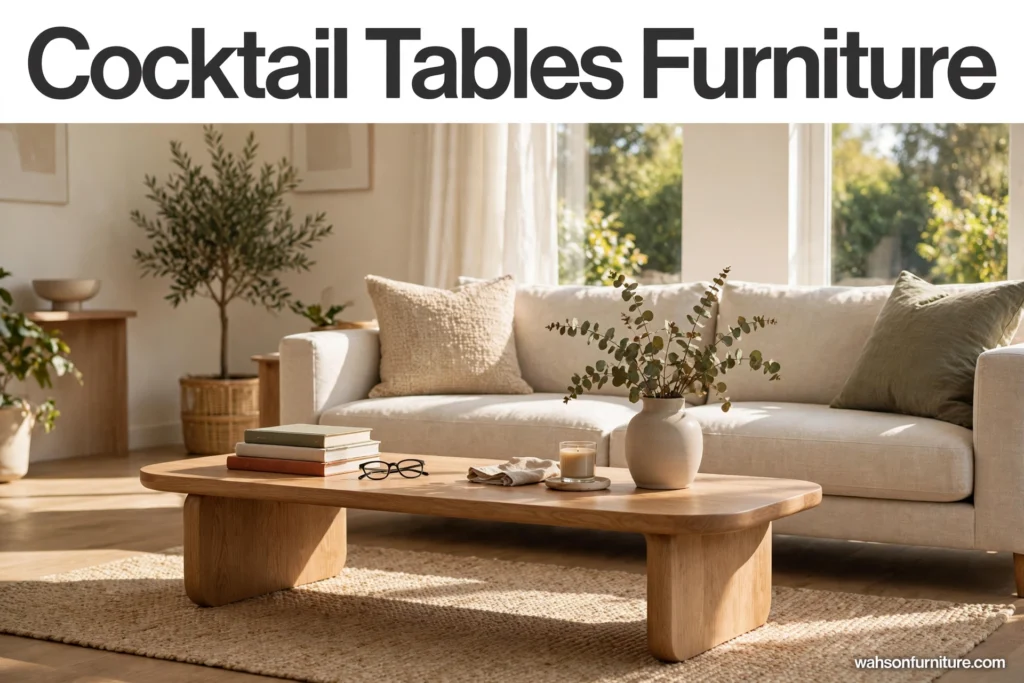
Cocktail tables furniture is the low table that sits in front of a sofa, holding drinks, books, remotes and decorative pieces within easy reach. In modern homes the term means the same thing as a coffee table, and the right one is chosen by size, shape and material — not by its name.
Key Takeaways
- A cocktail table and a coffee table are the same piece in most modern homes — the name is about history, not design.
- Size matters most: about half to two-thirds as long as the sofa, with 14 to 18 inches of space around it.
- Height usually sits at 16 to 18 inches, at or just below the sofa seat.
- Shape follows the room: rectangles suit long sofas, round and oval tables suit tight spaces.
- Material is a lifestyle choice — wood is forgiving, glass looks light, metal and stone make a stronger statement.
- Style it simply: one tray, one taller item, one personal touch, and empty space left over.
What Is A Cocktail Table?
A cocktail table is a low table placed in front of a sofa or a group of chairs, holding drinks, snacks, books, remote controls and decorative objects. It anchors the seating area: without it, a sofa and chairs can feel like separate pieces floating in a room; with it, the group reads as one place to sit.
The name comes from entertaining. Cocktail tables entered American living rooms in the 1920s, when cocktail parties became a regular way to socialise and hosts needed a small surface for drinks. Coffee tables are older — they became popular in Victorian England in the 1800s, as a low table for serving tea and coffee. (Wikipedia)
In practice, cocktail tables furniture covers every kind of low living-room table, from a simple wooden rectangle to a glass-topped statement piece. Some guides claim a strict rule — cocktail tables square or rectangular, coffee tables round or oval — but sellers follow no single rule, and many use the two names for the same product. (Chairish)
What Size Should A Cocktail Table Be?
Size is the single most important decision, and it starts with the sofa. A table that is too large overwhelms the seating area; one that is too small looks lost and cannot hold what people actually use. When you shop for cocktail tables furniture, start with the sofa, not the showroom.
The most widely used starting point is a table about half to two-thirds as long as the sofa. Measure the sofa from arm to arm, then pick a table inside that range, leaving about 14 to 18 inches of clear space between the table and the sofa so people can sit and stand up without shuffling sideways.
| Sofa Length | Table Length | Table Depth | Best For |
|---|---|---|---|
| Up to 6 feet | 24 to 36 inches | 18 to 24 inches | Small rooms |
| 6 to 8 feet | 36 to 48 inches | 20 to 28 inches | Standard rooms |
| 8 to 10 feet | 48 to 60 inches | 24 to 30 inches | Large rooms |
| Over 10 feet | 60 inches or more | 28 to 36 inches | Great rooms |
These are starting ranges, not hard rules. A sectional often works better with a square or round table inside the seating shape.
Height deserves the same attention. Most cocktail tables are 16 to 18 inches tall, putting the top at or just below the sofa seat, so reaching for a drink feels natural. Much higher, and it feels like a desk; much lower, and it is awkward to reach.
If you often eat in front of the television, a standard low table is not comfortable for full meals — a lift-top table that raises to elbow height may serve you better. If the table needs to do double duty, extendable dining tables furniture is worth a look first.
Which Shape Works Best?
Shape changes how a table behaves in a room, and the right choice depends on the sofa, the traffic and who uses the room. There is no best shape in general — only a best shape for your layout.
| Shape | Works Well When | Watch Out For |
|---|---|---|
| Rectangle | Long sofas, formal layouts | Corners catch knees |
| Round | Tight spaces, children, traffic | Less surface |
| Oval | Narrow rooms, soft flow | Hard to find with storage |
| Square | Sectionals, compact groups | Blocky by a long sofa |
| Nesting tables | Small rooms, occasional guests | Small anchor |
Rectangular tables are the easiest to live with: they line up with a straight sofa, give the most usable surface, and come in the widest range of styles. Round and oval tables are safer when people walk around all sides, or when small children are in the room — there are no corners to catch. Square tables suit sectionals and compact groups. Nesting tables suit small rooms: a set that slides under itself pulls out when guests arrive and tucks away after.
Which Material Should You Choose?
Material decides how the table looks, how it ages and how much care it needs — the right one depends on how the table will be used every day.
Wood is the most forgiving choice: warm, durable, easy to repair, and it hides small scratches better than glass or glossy finishes. Solid wood costs more than veneer but lasts longer. Wicker is a relaxed wood-based option — our guide to wicker coffee tables shows how it suits casual rooms and covered outdoor seating.
Glass makes a room feel lighter and more open, which helps in small living rooms, but it shows fingerprints, dust and clutter faster than any other surface and needs regular cleaning — and it reveals everything on a lower shelf.
Metal brings an industrial or modern character and is very hard-wearing, but it can feel cold among soft fabrics, and thin frames can scratch floors without protective feet. Stone and marble look premium and age well, yet they are heavy and expensive and can stain without coasters. Mixed materials — a wooden top on metal legs, or a stone top on a wooden base — often give the best balance.
How Do You Style A Cocktail Table?
The table is a working surface first and a display second. Start with a tray: it groups small items, protects the surface from rings and lifts away when you need the whole table. On the tray, place one taller item — a vase, a candle holder or a small sculpture — and one personal touch, such as a book. Then stop: a table covered edge to edge leaves nowhere to put a cup down.
The same rule applies to other surfaces — our guide to decorating a console table uses the same one-tray, one-tall-item approach. Light matters too: a table in shadow looks dull, and decorative lamp shades in linen or woven fibres soften the light around the seating area.
Keep the styling low enough that people can see each other across the table — the tallest object should stay below the eye line of a seated person, usually no higher than about 12 inches above the table top. If the budget is tight, start with what you already own: a tray, a book and a vase from another room can style a new table for nothing. Our guide on how to create a luxury living room on a budget shows where to spend and where to save.
What Mistakes Should You Avoid?
Five mistakes undo most cocktail tables: buying before measuring; choosing style over clearance, so a beautiful table blocks the walkway; overfilling the surface, so there is nowhere to set a drink down; matching everything, so the room looks like a showroom; and ignoring who uses the room — a glass table with sharp corners is a poor choice in a house with toddlers.
Care is simple: dust weekly with a soft, dry cloth, use coasters for every drink, and wipe spills straight away. Keep the table out of strong direct sun, and check the feet twice a year — loose glides scratch floors and make the table wobble.
Frequently Asked Questions
Is a cocktail table the same as a coffee table?
In most modern homes, yes. Both are low tables in front of a sofa for drinks, books and everyday items. The names come from different histories, but sellers use the two terms interchangeably today — judge a table by its size, shape and material, not its name.
What size cocktail table do I need for my sofa?
Choose a table about half to two-thirds as long as your sofa, measured arm to arm, with 14 to 18 inches of clear space between the table and the sofa. For a 6 to 8 foot sofa, that usually means a table 36 to 48 inches long.
How far should a cocktail table be from the sofa?
About 14 to 18 inches is the range most guides suggest. Closer, and people squeeze past it to sit down; further away, and reaching for a drink becomes a stretch.
What shape is best for a small living room?
Round or oval tables usually work best in small rooms because they have no corners, so people can walk around them easily. Nesting tables are another good option — they pull out when guests arrive and tuck away after.
Are glass cocktail tables practical?
They can be, if you like a light, open look and do not mind cleaning. Glass makes a small room feel bigger, but it shows fingerprints and clutter quickly. If the table will hold daily clutter, wood is more forgiving.
How do I style a cocktail table without cluttering it?
Use a tray to group small items, add one taller piece such as a vase, and one personal item such as a book. Leave at least a third of the surface empty, and keep the tallest object below the seated eye line.
Conclusion
Cocktail tables furniture earns its place when it fits the sofa, leaves room to move, and carries the things you actually use. Start with measurements — sofa length, seat height and walking space — then choose the shape for your traffic and the material for your daily life. Style it simply, with a tray, one tall piece and empty space to spare. A table chosen that way does not shout about itself; it just makes the living room work better every day.
Pingback: Jackson Furniture Lamar Loveseat