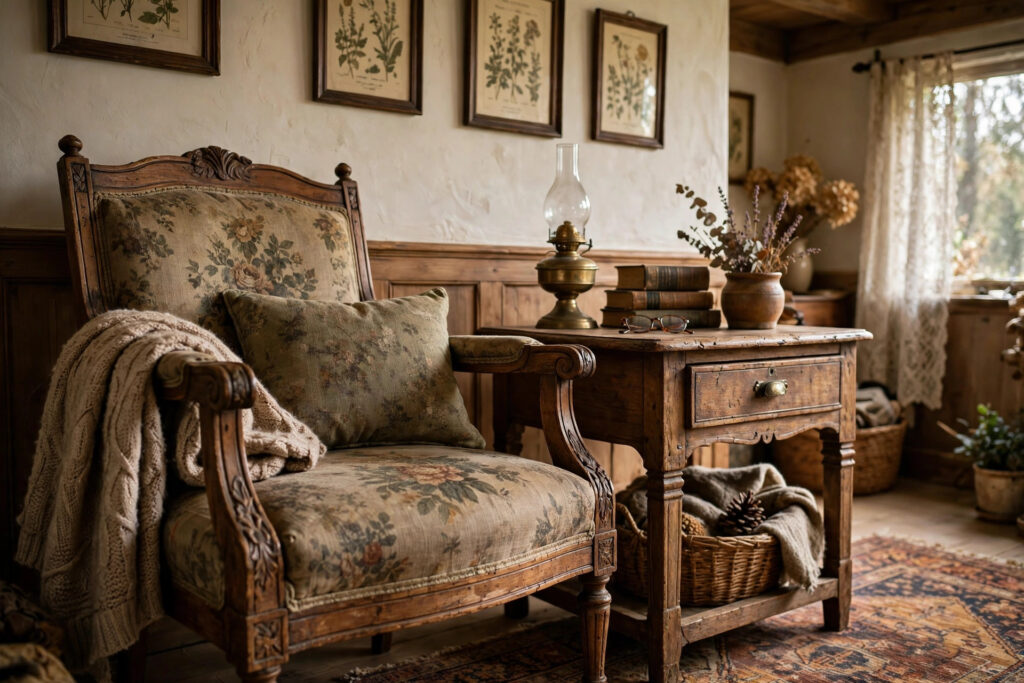
Vintage furniture has a look that new furniture often cannot copy. The wood has a depth, the joints are solid, and the piece has already survived decades of use. But not every old piece is good. Some vintage furniture is well made and worth restoring. Some is simply old, damaged, and overpriced. Learning how to spot real quality will save you money and help you find pieces that will last for another twenty years.
This guide explains what counts as vintage, how to check wood, joints, and hardware, and how to tell a genuine piece from a reproduction or a fake.
What Counts as Vintage, and Why It Matters
Vintage usually means a piece that is at least 20 to 30 years old, but not yet an antique, which is usually 100 years or older. A vintage piece was made in a particular era, such as mid-century modern, Art Deco, or 1970s rattan, and it shows the style and materials of that time.
Age alone does not make a piece valuable. A well-made chair from the 1960s is worth more than a poorly made chair from the same year. A piece that was made in a factory, with cheap materials and a short life, is not more valuable because it is old. It is just old.
The value comes from three things: the quality of the materials, the quality of the craftsmanship, and the design. A piece with solid wood, good joints, and a clear design will hold its value. A piece with particleboard, stapled joints, and a dated style will not.
How to Spot Quality: Wood, Joints, and Hardware
Start with the wood. Solid wood is heavy, and it feels warm to the touch. Knock on it gently. Solid wood gives a dull, solid sound. Particleboard gives a hollow sound. Look at the grain. Real wood has a grain that runs through the piece, and the pattern will change from one part to another. A printed grain, or a veneer that repeats the same pattern, is a sign of a cheaper piece.
Check the joints. A dovetail joint, where the wood interlocks like fingers, is a sign of good craftsmanship. A mortise and tenon joint, where a peg fits into a hole, is also strong. A joint held together only by staples or glue is weak, and it will loosen over time. Pull gently on a leg or an arm. A good joint will not move. A weak joint will wobble.
Check the hardware. Original brass, copper, or steel handles, hinges, and locks are a good sign. They will have a patina, a soft, aged look, that is hard to fake. Ask the seller if the hardware is original. Good hardware also shows in new pieces, and office furniture trends in 2026 and how smart branding and furniture design shape modern hospitality spaces show how details like handles and finish shape a room.
Signs of Damage, Repair, and Fakes
Every vintage piece will have some wear. A scratch on a tabletop, a faded patch on a chair, or a small chip on a leg is normal. That wear is part of the story, and it is often called patina. What matters is whether the wear is honest, or whether it is hiding damage.
Be careful with fakes. A reproduction can look like a vintage piece, but it will often have new wood, new hardware, and a finish that is too perfect. A genuine vintage piece will have wear in the places where hands touch it, such as the arms of a chair and the edge of a table. A fake will have wear that looks painted on, or wear that is in the wrong place. If a piece looks too perfect for its age, ask questions.
Room conditions matter for vintage pieces too. A piece that has survived in a dry, stable room will be in better condition than a piece that has been in a damp, hot room. The same conditions that affect new furniture affect old furniture, and tiny apartments can be hard on furniture, so check a piece carefully if it has been stored in a small, damp space.
Where to Use Vintage Pieces, and How to Care for Them
A vintage piece works best when it is used, not just displayed. A vintage chair at a dining table, a vintage chest in a bedroom, or a vintage sideboard in a living room will look better than a piece that is kept behind glass. Use it, but use it gently. Do not place a hot plate directly on a vintage table. Use mats and coasters. Do not drag a vintage piece across the floor. Lift it, or put sliders underneath it.
Clean a vintage piece gently. Dust it with a soft, dry cloth. Use a wood cleaner made for the finish, and test it in a hidden spot first. Do not use a strong chemical, a steam cleaner, or a rough sponge. Those can strip the finish and damage the wood. Condition the wood once or twice a year with a wax or oil made for the finish, and buff it with a soft cloth.
Decorative pieces work well with vintage furniture. A simple vase, a branch arrangement, or a framed print can complement a vintage piece without overwhelming it. The same eye for detail that makes decorative branches for modern home decor work in a modern room can make a vintage piece feel at home, not out of place.
Conclusion
Vintage furniture is worth buying when the wood is solid, the joints are strong, the hardware is original, and the wear is honest. It is not worth buying when the piece is damaged, repaired badly, or a fake. Check the wood, the joints, the hardware, and the underside, ask about repairs, and look for wear in the places where hands touch the piece.
For help caring for what you buy, read How to Clean Leather Furniture Properly Without Damaging It and Luxury Furniture: What Makes It Worth the Price? before your next purchase.
Pingback: Luxury Furniture: What Makes It Worth the Price? – Wahson Furniture
Pingback: How to Clean Leather Furniture Properly Without Damaging It – Wahson Furniture