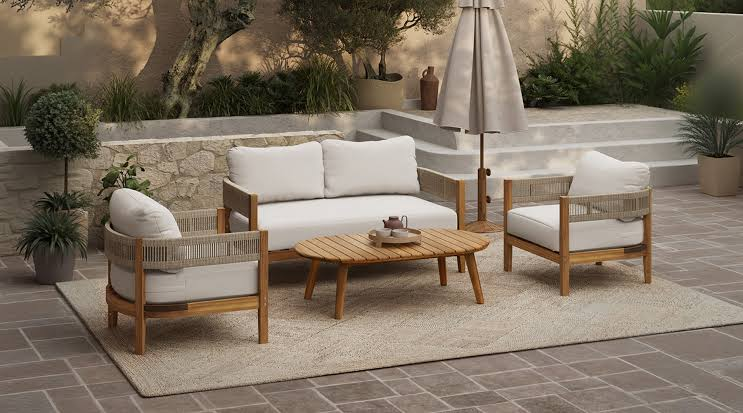
A patio is an extra room, but only if the furniture fits it. The right outdoor furniture will survive rain, sun, and daily use, and it will still look good after a few summers. The wrong set will rust, fade, or fall apart in a year. This guide explains how to choose a material, size a set for your patio, and care for it so it lasts.
Choose a Material That Suits Your Climate
Teak is one of the best outdoor woods. It is naturally oily, it resists water and insects, and it turns a soft grey if you leave it untreated. It is expensive and heavy, but it will last for decades. Cedar and acacia are cheaper, but they need sealing every year or two, or they will crack and fade.
Aluminium is light, it does not rust, and it is easy to move. It can feel cold and light in strong wind, so choose a set with a solid base or keep it in a sheltered spot. Steel is stronger and heavier, but it will rust if the coating chips. Check the welds and the coating before you buy. Wrought iron is classic and very heavy, which is good in wind, but it needs regular painting to stop rust.
Rattan and wicker look warm and natural, and they are comfortable with cushions. Natural rattan will not survive rain, so choose synthetic rattan for outdoor use. It looks similar, it is easier to clean, and it will not rot. Plastic is the cheapest option, and it is light and easy to clean, but it fades in strong sun and it can crack in cold weather. A wicker coffee table indoors shows how good wicker can look, and the same material, in synthetic form, works well outside.
Size the Set for Your Patio
Measure the patio before you shop. Measure the length and width, and note where doors, steps, and plants are. Allow at least 90 centimetres between the table and the wall, so a person can pull out a chair and sit down. Allow at least 60 centimetres of table width per person.
A small patio needs a small set. A two-seat bistro set, a folding table, or a bench that can be pushed against a wall will work better than a large six-seat set that blocks the door. A large patio can take a dining set, a lounge set, and a sun lounger, but it will look empty if the furniture is too small for the space. Use masking tape on the patio to mark the outline of the set you are considering. Walk around it, pull out a chair, and open the door. That test will tell you more than any photo.
Small spaces make this harder, and tiny apartments can be hard on furniture, so a folding set that can be stored in winter is often the best choice for a small patio or balcony.
Care, Covers, and Storage
Outdoor furniture needs care, even if it is made for rain. Clean it regularly with warm soapy water, rinse, and dry it fully. Do not use a pressure washer on wood or wicker. It will strip the finish and damage the fibres. Use a soft brush, and let the piece dry in the shade, not in strong sun.
Covers are the simplest way to make a set last longer. A cover keeps rain, sun, and dust off the furniture, and it stops cushions from getting damp. Outdoor furniture covers are essential for every home, and a cover that fits well, with vents to stop condensation, is worth the cost. Put the cover on when the furniture is dry, not when it is wet, or mould will grow underneath.
Store cushions indoors when it rains, and store the whole set indoors in winter if you can. If you cannot store it indoors, put it in a sheltered spot, cover it, and check it once a month. Tighten any loose screws in spring, before you use the set again. A quick check in spring will catch a loose joint before it becomes a broken joint.
Buying Checklist
Before you buy, ask four questions. First, what is it made from, and will it survive your climate? Second, will it fit your patio, with room to walk around it? Third, is it comfortable for an hour, not just for a minute in the shop? Sit in it, lean back, and check the seat height and the back support. Fourth, can you care for it? A set that needs oiling every month will not suit a busy household.
Check the warranty. A good outdoor set should have at least two years, often five. Check if cushions are included, and if they are, check if the covers are removable and washable. A cushion that cannot be cleaned will look dirty after one summer. Check the weight. A set that is too light will blow over in wind. A set that is too heavy will be hard to move when you need to clean the patio.
Good outdoor furniture also holds its value. A well-made set, looked after and covered, can be sold on when you no longer need it, and where to sell outdoor furniture will help you get a fair price for it. The same design sense that shapes how smart branding and furniture design shape modern hospitality spaces applies at home: clean lines, solid joints, and a finish that survives daily use.
Conclusion
Outdoor furniture and patio design comes down to three choices: a material that suits your climate, a size that fits your patio, and a care routine you will actually follow. Measure first, sit in the set before you buy, and use a cover and dry storage in winter. Do that, and your patio set will last for many summers, not just one. For the next step, read Replacement Cushions for Outdoor Furniture: How to Measure and Choose before you order new cushions.
Pingback: Where to Sell Outdoor Furniture: Best Options That Actually Work – Wahson Furniture
Pingback: DecorAdHouse Garden Tips: Easy Ways to Make Your Garden Beautiful – Wahson Furniture
Pingback: DecadGarden Yard Tips: Transform Your Yard into an Outdoor Living Space – Wahson Furniture
Pingback: DecorAdTech Home Devices: The Best Home Devices for a Comfortable Home – Wahson Furniture