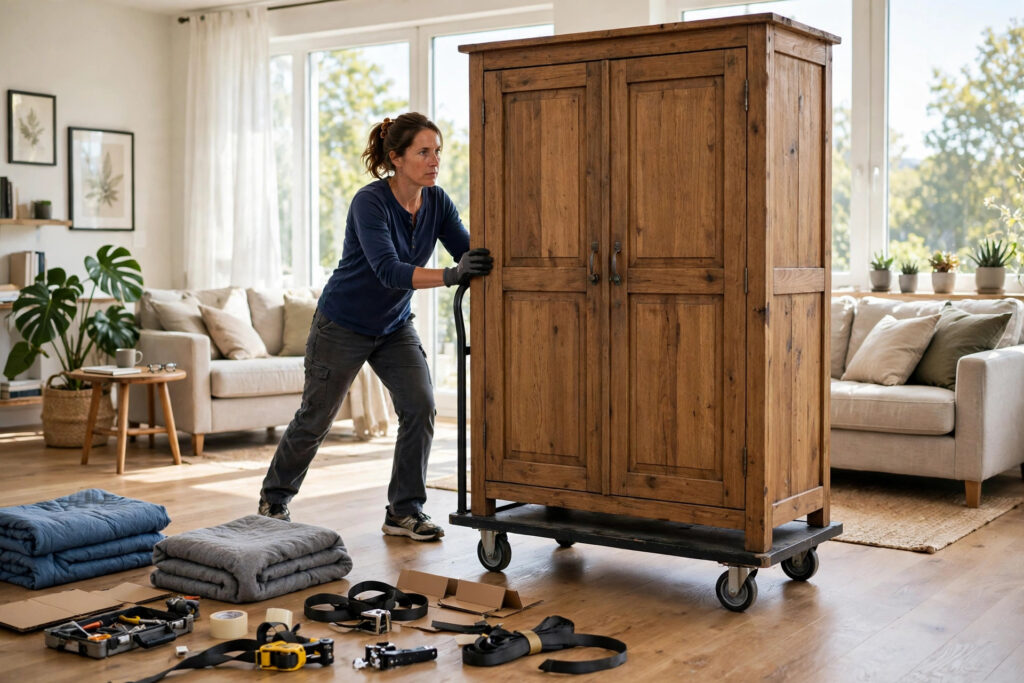
Moving a heavy sofa, wardrobe or dining table across a room can strain your back, scratch your floors and damage the piece itself, which is why a furniture dolly is one of the most useful tools a homeowner can own. This flat platform on four swivelling wheels lets one or two people shift loads that would otherwise need four strong helpers. The trick is knowing which type suits the job, how to load it safely and how to steer it through tight spaces. This guide shows you how to choose, load and steer one with confidence, so your next move goes smoothly and nobody gets hurt.
Why Moving Heavy Furniture Goes Wrong So Often
Most moving injuries share the same cause: people try to drag, lift or tilt a piece that is far heavier than it looks. A solid wood wardrobe can weigh more than a person, and a three-seater sofa turns awkward the moment it meets a corner. Dragging gouges wooden floors, tears carpet and snaps small feet off the base. Lifting with a bent back is worse, because the strain lands on the spine and the knees at the same time. Even careful helpers struggle with a tall, top-heavy piece, and one slip can crack a leg or trap a finger. A rolling platform changes the task: the weight rests on wheels instead of on people, and the move becomes a slow, controlled push rather than a risky lift. If your home needs other small fixes after a move, easy home repairs every homeowner should know covers the jobs worth doing first.
Choosing the Right Furniture Dolly for the Job
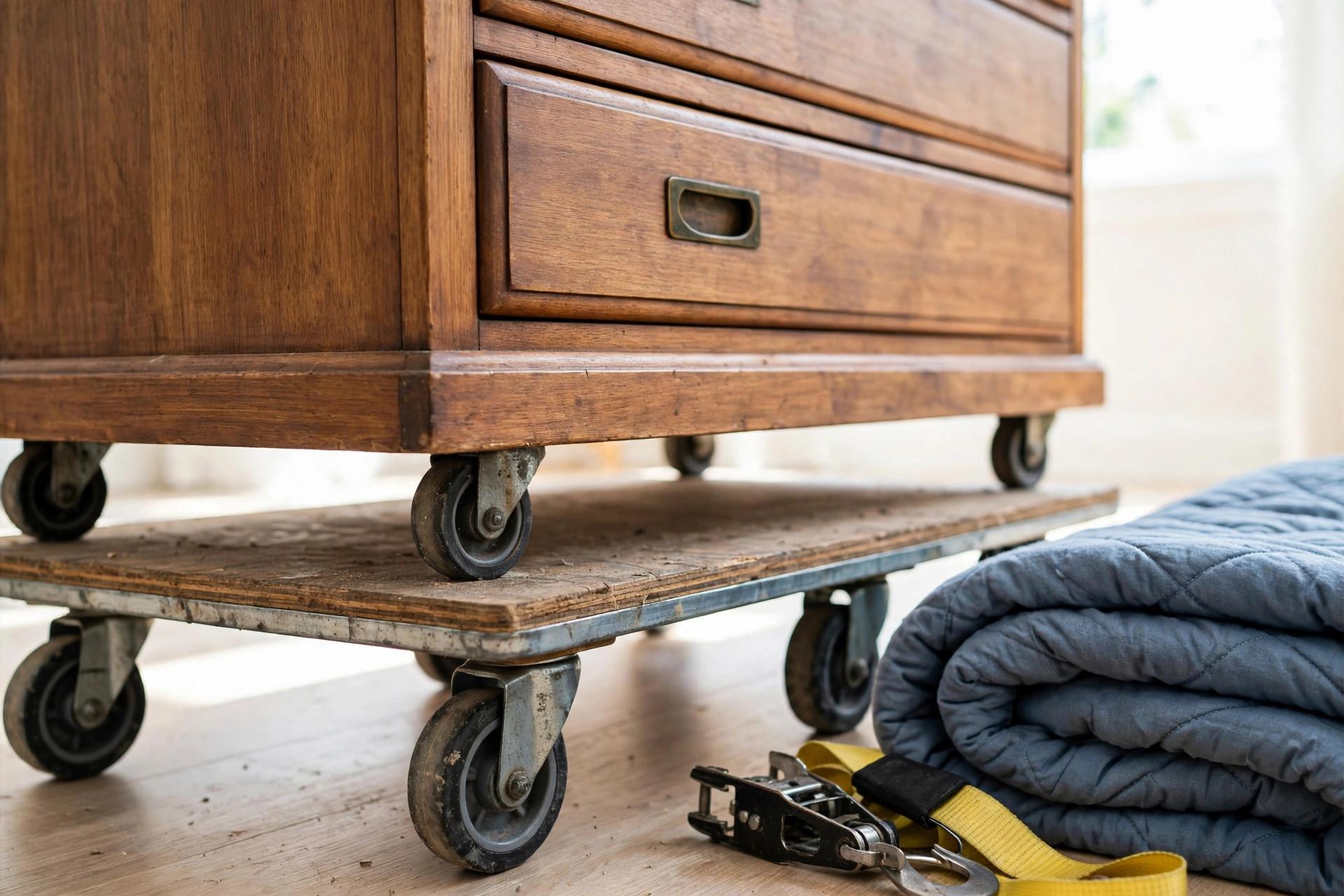
There are two main types, and choosing the wrong one is the most common mistake. A four-wheel platform is a low, flat deck on swivelling castors, made for sliding under a heavy piece and rolling it across a flat floor. It suits wardrobes, chests, sofas and washing machines. A two-wheel hand truck is the tall, upright tool with a small toe plate and handle, made for tilting a load back and wheeling it along; it suits stacked boxes, tall cabinets and appliances, and can climb a kerb or a single step. Check the weight rating before you buy or hire, and leave a safety margin. Look for solid rubber or polyurethane wheels that roll quietly and will not mark floors, and a deck large enough for the base. If you are shopping for a new tool, how to find the best furniture deals can save money, and where to buy quality furniture explains what to look for in a reliable retailer.
What to Check Before You Load Anything
Good preparation takes ten minutes and prevents most accidents. Measure the piece and every doorway, hallway turn and lift entrance, and write the numbers down. Clear the path completely, roll up rugs, move pet bowls and cables, and protect wooden floors with hardboard or a moving blanket at tight corners. Empty drawers, shelves and cabinets first, because the contents add weight and slide around, throwing the piece off balance. Take off doors, legs or shelves that stick out, and keep the screws in a labelled bag taped to the piece. Check the wheels and deck for damage, and spin the castors to make sure they turn freely. If the move is part of a bigger project, how to plan a home renovation without the stress helps you sequence the work so nothing is moved twice.
Loading and Securing the Piece
Loading is where most damage happens, so take it slowly. Tip the piece just enough to slide the platform underneath, with the deck centred under the heaviest part, and lower it gently. The centre of gravity should sit low and central; a top-heavy piece will tip at the first turn. Wrap the piece in a moving blanket first, because straps alone can dent soft wood and mark polished surfaces. Run a ratchet strap or strong rope around the piece and the deck, and pull it snug without crushing the wood. Leather needs extra care, so read how to clean leather furniture properly before you wrap a leather sofa, and what makes luxury furniture worth the price explains why good construction survives a move better.
Moving Through Doorways, Stairs and Tight Corners
Steering is a skill, not a shove. Push from the low end with both hands, keep your back straight, and move slowly enough to stop at any moment. At a doorway, line the load up squarely first, and have a helper watch the far side for clearance. For a tight corner, pull the front of the platform around first while a helper steadies the top. Never take a loaded four-wheel platform down stairs; the wheels will run away and the load will follow. If the piece must change floors, carry it separately or use a stair-climbing hand truck with a helper. On ramps, walk behind the load going up and never stand in front of it coming down. Heavy dining furniture deserves the same care, so read choosing the right dining room set before you move a table, and keep clever home hacks for everyday living in mind.
Common Mistakes That Damage Floors and Furniture
The same errors appear again and again. Overloading is the first: a platform rated for a modest load will bend or collapse under a solid oak wardrobe. Rushing is the second: a quick push ends with a dented wall and a chipped corner. Dragging the piece off the platform instead of lifting it clear tears castors and scratches the floor. Skipping the straps is another classic, because an unsecured piece slides off the deck at the first bump. A wet or gritty floor grinds dirt into wood, so sweep first and lay protection down. Never move an old piece by its most fragile part: lift a chair by its seat rails, not its arms, and a table by its apron, not its top. Vintage pieces are especially vulnerable, so learn how to spot real quality vintage pieces and read choosing the right extendable dining table before moving a table that opens up.
Conclusion
A furniture dolly turns a dreaded chore into a manageable job. Choose the right type, check its weight rating, clear the route, secure the load, and move slowly with a helper watching the corners. Your back, floors and furniture will all be grateful. Store it somewhere handy, and the next rearrangement will take half the time and none of the worry.