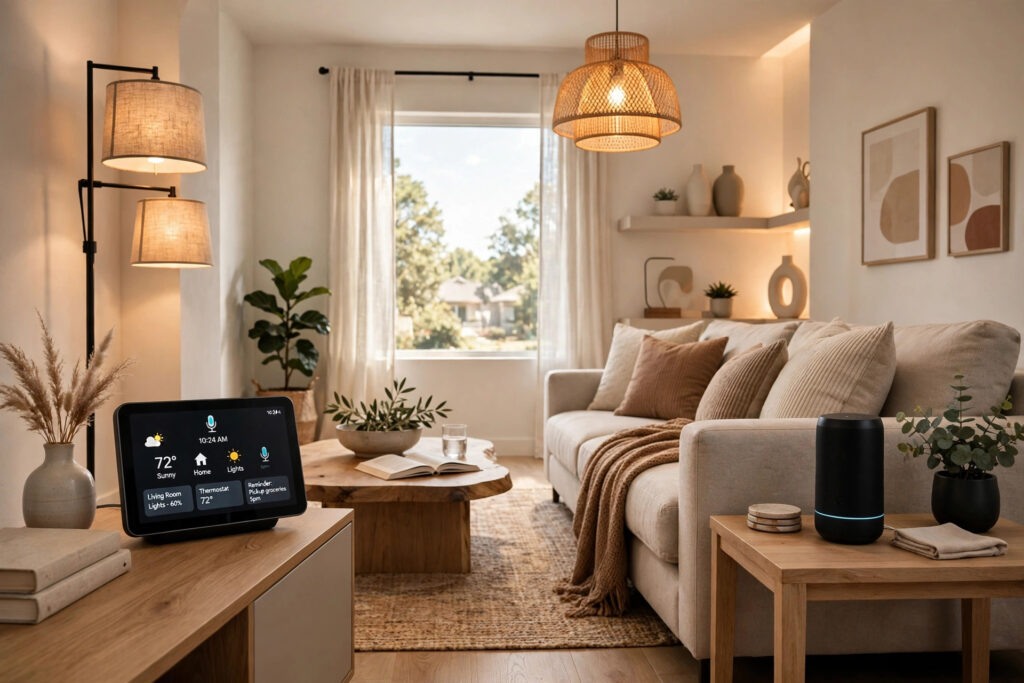
A home that responds to you sounds like something from the future, yet decoradtech brings that idea into ordinary rooms today. It is a way of thinking about home decor in which lighting, sound, heating and everyday devices work together quietly in the background, so your rooms feel comfortable without extra effort. Instead of treating technology as a gadget collection, this approach treats it as part of the decor itself: a speaker that looks like a sculpture, a lamp that warms a corner at dusk, a thermostat that learns when you are home. This guide explains what the idea means, which devices matter most, and how to start small without rewiring your house or spending a fortune.
What DecorAdTech Means for a Modern Home
At its simplest, this idea joins two things most homes already have: decoration and everyday technology. A room is no longer styled only with colour, furniture and fabric; it is also shaped by how the lights behave in the evening, how music follows you from the kitchen to the sofa, and how the heating eases off when everyone leaves. Devices are chosen to look good in the room, not to sit on top of it like laboratory equipment. A wall panel can match the paint, and a lamp can be both a reading light and a soft evening glow. If you want a fuller picture, start with the best home devices for a comfortable home and then read simple smart home ideas for beginners for a gentle first step. The point is not to own the newest gadget, but to choose a small set of devices that suit your rooms, your routines and your budget, and to let them fade into the background.
How Smart Devices Change Everyday Living
The biggest change a connected home brings is not dramatic; it is the slow disappearance of small daily frictions. Mornings become easier when the bedroom light rises gently instead of snapping on, and the news or your favourite music starts with a single spoken request. Evenings improve too: one command can dim the living room, close the blinds and switch the television input, so the room settles into its night-time mood without a hunt for remote controls. Routines are the quiet heart of this way of living. A morning routine can raise the blinds, set a comfortable temperature and read out the weather. That slow, problem-first approach keeps the house useful instead of cluttered with gadgets nobody uses.
Starting Small: One Room at a Time
The living room is the best place to begin, because it is where the family gathers and where small improvements are noticed fastest. Start with a voice speaker on a side table and one lamp you can dim from the sofa. Add a second lamp behind the television for a soft halo of light in the evening, and you have already changed how the room feels after dark. A reading corner needs a good lamp and a comfortable chair; a film corner needs dimmable light and a clear view of the screen. If a new piece of furniture is on the list, our guide on what makes luxury furniture worth the price helps you judge quality before you spend, and knowing how to assemble furniture saves time and stops a panel going in backwards.
Lighting, Comfort and Control
Lighting does more work than almost any other purchase in a connected home. A single bright ceiling light flattens a room, while layers of light give it depth: a warm overhead light for cleaning and cooking, a floor lamp for reading, and a small table lamp for quiet evenings. Connected bulbs let you change that balance without getting up, and they let you warm the colour of the light as the evening goes on, which helps the whole house feel calmer before bed. A smart thermostat learns when the house is busy and when it is empty, warming the bedroom before bed and cooling the living room later. The goal is a house that adjusts itself in small ways, so you rarely think about temperature or light at all. For more ideas, browse home decor ideas from TheHomeTrotters, home decor ideas and our complete guide to home decor ideas.
Common Mistakes to Avoid When Adding Smart Devices
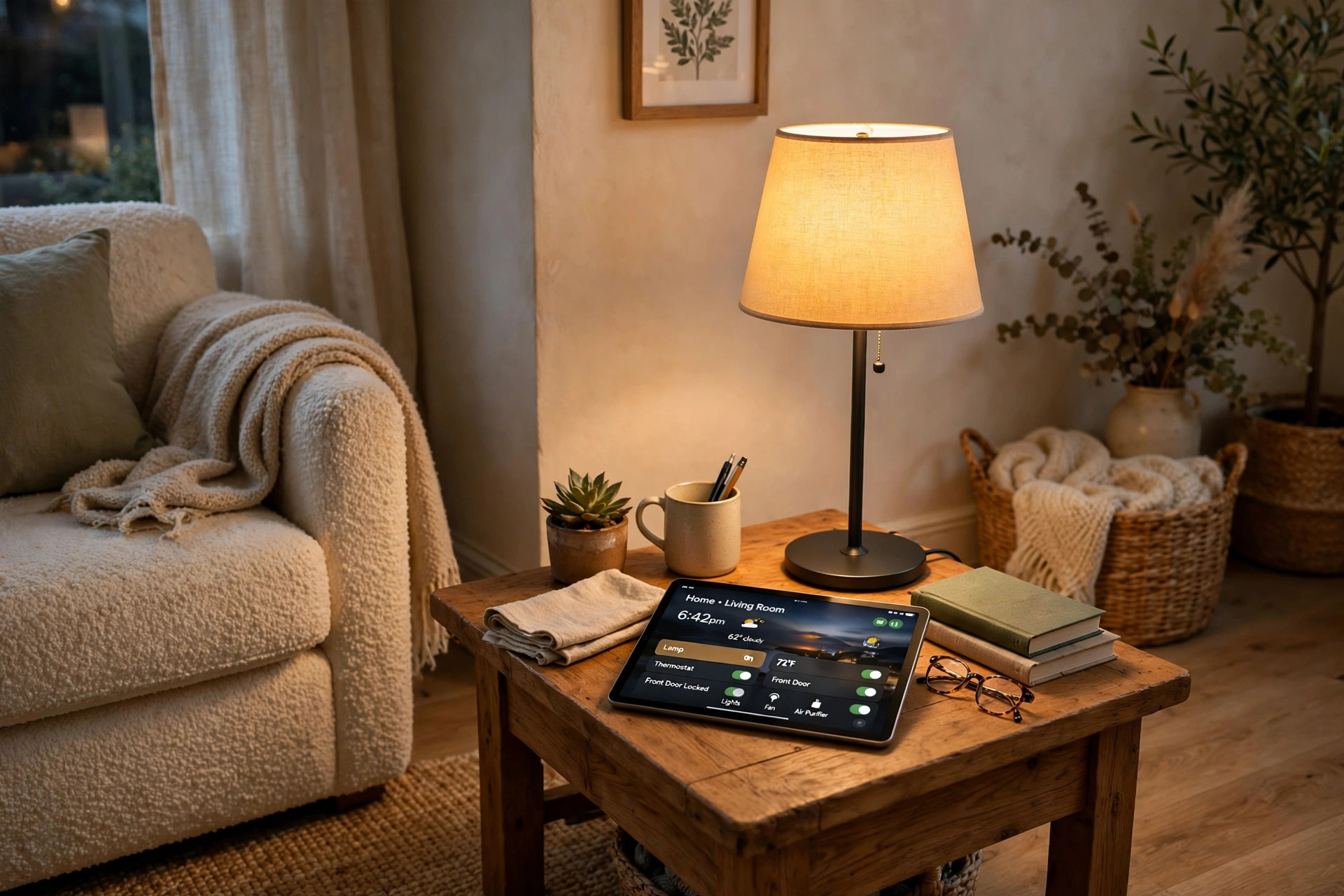
The most common mistake is buying too much, too fast. A house full of devices from five different brands, each with its own app, quickly becomes harder to use than the simple switches it replaced. Choose one main system first — the voice assistant your household already uses — and check that every new device works with it before you buy. A second mistake is ignoring the Wi-Fi. Connected devices need a steady signal in every room, so a weak router in one corner of the house will make lamps slow and speakers drop out. A third mistake is skipping the basics of security: change default passwords, keep device software updated, and switch off any microphone or camera feature you do not use. Finally, do not hide every switch.
Planning a Smarter Home on a Sensible Budget
A smarter home does not need a large budget, but it does need a plan. Write down the three daily annoyances you would most like to remove — perhaps fumbling for lights at night, a cold bedroom in winter, or music that never reaches the kitchen — and spend only on those. A sensible starter set is one voice speaker, two dimmable bulbs and one connected plug. Add one device a month at most, and only after the last one has earned its place. If you want a room-by-room shopping list, read the best devices for every room for device ideas in each space. To go further, make your home smarter step by step with a staged plan, and explore ideas, devices and setup for beginners before your next purchase.
Conclusion
A smarter home is not about owning every new device on the shelf. Decoradtech works best when technology disappears into good decoration: warm light where you read, gentle sound where you relax, and a comfortable temperature that arrives before you notice you need it. Start with one room, solve one real annoyance, and let the house grow smarter at your own pace. The result is a home that looks beautiful, feels calm, and quietly takes care of the small things, so you can spend your evenings enjoying it instead of managing it.