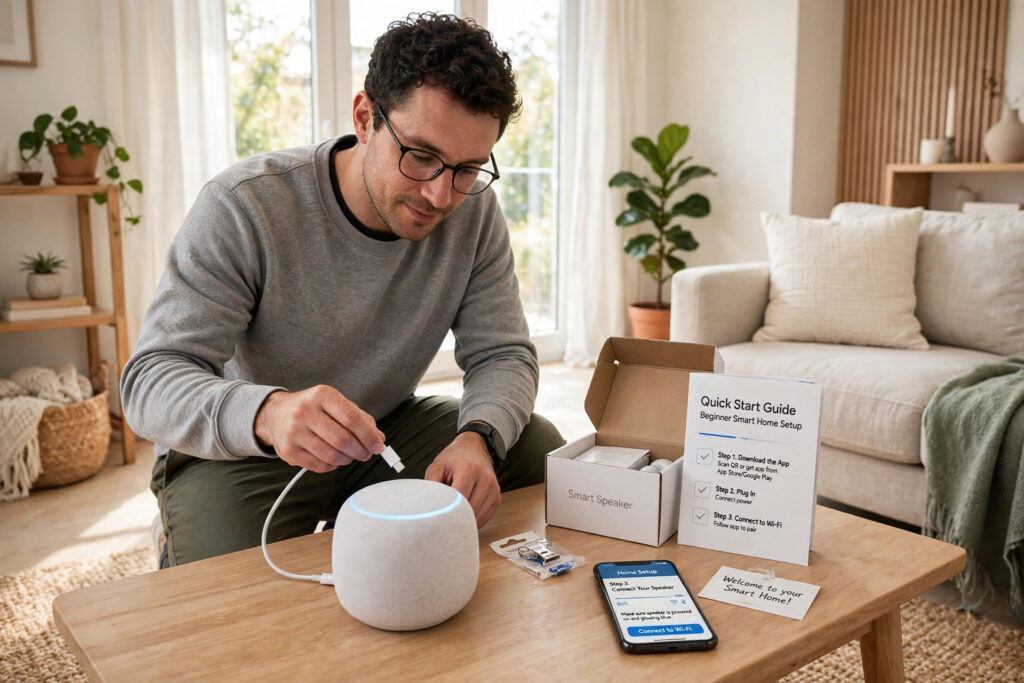
Starting a connected home can feel confusing, with too many gadgets and promises competing for your attention. The idea behind smart home decoradtech is simpler than the adverts suggest: choose a few helpful devices, place them where they make life easier, and set them up so they work quietly in the background. This guide is for complete beginners, with no expensive kit required.
You do not need to replace your furniture or repaint every room. You need a clear plan, one room at a time, and test each change for a week. By the end of this guide, you will know which devices to buy first and how to set them up safely.
What to Buy First and What to Skip
Begin with the devices that solve a problem you already have. If evenings feel too dark, start with two warm bulbs. If you often forget to lock the door, start with a simple sensor or a doorbell. If mornings feel rushed, start with a speaker that can read the weather while you get ready. One real problem is a better guide than any shopping list.
Skip gadgets with no clear job in your home. A device that needs constant attention, a separate app for every task, or a battery that dies every few days will soon sit unused in a drawer. Look for simple controls and a device that works even if the internet drops for an hour. For a gentle start, read our guide to simple smart home ideas for beginners.
Before you spend anything, walk through your home and list the three moments each day that feel awkward or wasteful. That list is your shopping list. Buy for that list, and nothing else, for now. The decoradtech smart home ideas by decoratoradvice roundup shows how other beginners chose their first devices.
smart home decoradtech for Beginners: A Simple First Week
A first week works best when you change only one thing each day. On day one, fit the bulbs and learn the app. On day two, set a morning light that rises gently. On day three, add a speaker and learn one voice command. Small daily wins build confidence faster than a single long setup session.
Keep a note on your phone for what works and what annoys you: the time a light comes on, whether the speaker hears you from the sofa, and whether a routine feels helpful. At the end of the week, keep the changes that helped and remove anything that added stress. Show everyone in the house the one button or voice command they will actually use.
Choosing Devices for Each Room
Each room has a different job, so each room needs a different device. In the living room, a speaker and warm lights support conversation and reading. Place the speaker at ear height, near where people sit, and keep the lights low and warm in the evening.
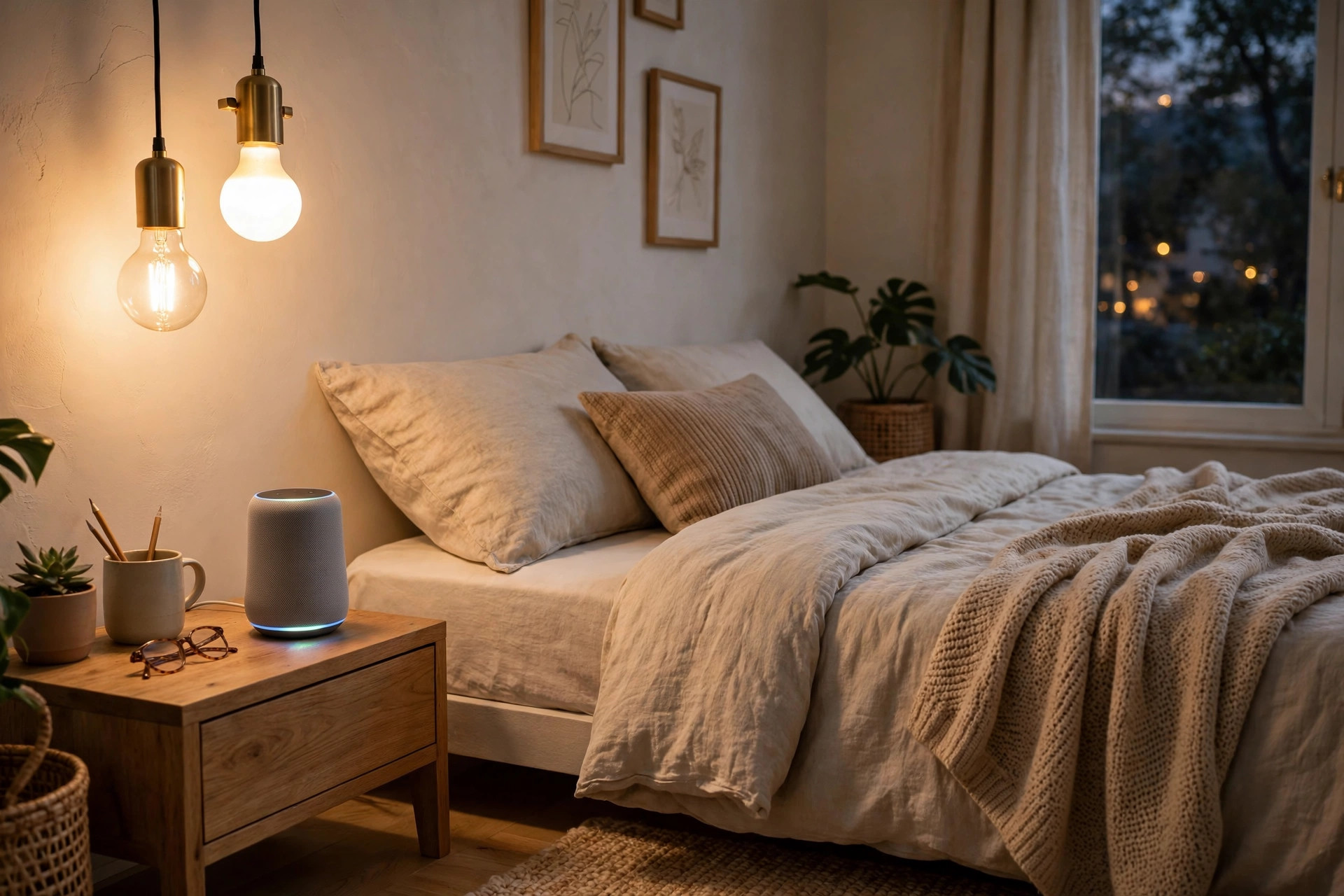
In the bedroom, choose calm over clever. A bulb that fades slowly can help you sleep, but a bright display or a noisy alert will do the opposite. Keep the bedside table simple. Our roundup of the best home devices for a comfortable home explains which devices suit each space, and what it is and how it makes your home smarter gives a clear overview.
In the kitchen, safety and convenience matter most. A light that comes on when you enter and a timer you can set by voice are genuinely useful. Keep devices away from water and heat, and make sure every control still works by hand if the power fails.
How to Set Up Your First Devices
Many beginners wonder how to set up my home decoradtech without calling an expert, and most first devices are designed for exactly that. Start with a strong internet connection in that room, then follow the app: plug the device in, give it a clear name, and test it once before moving on.
Name every device by its room and job, such as living room lamp or bedroom speaker, so voice commands feel natural. Group devices by room in the app, and check that each one responds before you build a routine around it. If a device will not connect, move it closer to the router.
Set up a routine only after the single devices work well on their own. A good first routine is an evening one: dim the lights, lock the door, and lower the heating a little. Test it for a week, changing one part at a time if it feels wrong. Keep a manual switch for every routine.
Keeping Your Home Safe and Private
Safety is part of setup, not an afterthought. Use a strong, unique password, turn on two-step sign-in if the app offers it, and keep the app and each device updated. Check for updates once a month.
Be careful with cameras and microphones. A camera belongs at the front door, and a microphone should only listen when you ask it to. Turn off features you do not use. Give family members only the controls they need.
Styling, Furniture and Small Upgrades
Technology should fit your decor, not fight it. Choose devices in colours that match your walls and furniture, and hide cables behind a sofa.
Small upgrades can make a big difference without a new device. A mirror opposite a window brightens a dark room, and a rug softens a hard floor. Our guide to small upgrades that make a big difference at home is full of low-cost ideas, and home tips from thehometrotters show how simple habits keep a home comfortable.
When new furniture arrives, put it together properly, because a wobbly table will annoy you far longer than a slow app. Our step-by-step guide for beginners walks through the process safely. For outdoor spaces, the decoradyard guide and the ideas in thehometrotters trisha show how the same calm thinking works outside too. To plan the next stage, read the best devices for every room and make your home smarter step by step.
Conclusion
A beginner-friendly connected home is not about buying everything at once; it is about choosing one helpful device, setting it up properly, and living with it until it feels natural. Start with light, sound, and safety, and keep routines short. That steady path is what makes smart home decoradtech work for real beginners: a home that is easier to live in and calmer to come home to.